Research news on climate, environment and suistainability
-
When drought strikes: What can we learn from Norwegian media about the consequences? Aug. 17, 2026
Large parts of Northern Europe experienced extreme drought in 2018. Hydrologists at University of Oslo have searched Norwegian media for drought impact reports from 2000 to 2018 in order to better understand its consequences.
-
– Oil is rarely the cause of war July 2, 2026
It is a misconception to talk about “oil wars” and about great powers going to war to secure energy. Oil is rarely the cause of war – but often one of the most important instruments once a conflict has started, according to an energy researcher.
-
An oil spill threatened the library’s underground storage. That’s when researchers found a fungus that can release the oil. June 22, 2026
Now they are working on scaling up the process.
-
There are many places where wild bees can thrive, but they need forest edges to disperse June 10, 2026
Loss and fragmentation of habitats can lead to greater distances between wild bee populations, resulting in isolation of populations. Researchers are therefore developing maps that tracks wild bees’ dispersal routes.
-
Magmatic pressure can fold solid rock in less than one day May 4, 2026
The consequences of volcanic eruptions can be severe. Now researchers at the University of Oslo have made a surprising discovery: magma pressure can fold solid rock in less than a single day. They found the evidence on a mountainside.
-
Sámi rights under pressure in the face of green transition Apr. 16, 2026
“The Green Shift” is presented as a necessary and morally correct project. But what happens when climate interventions encroach upon the land of those who have lived off and with nature for generations?
-
The Norwegian Oil Fund: “It is almost impossible to separate ethics from politics.” Mar. 16, 2026
The Norwegian state has always tried to avoid politicising oil. That seems to be slipping now, says historian Einar Lie.
-
Looking for covert environmental crime at sea Mar. 10, 2026
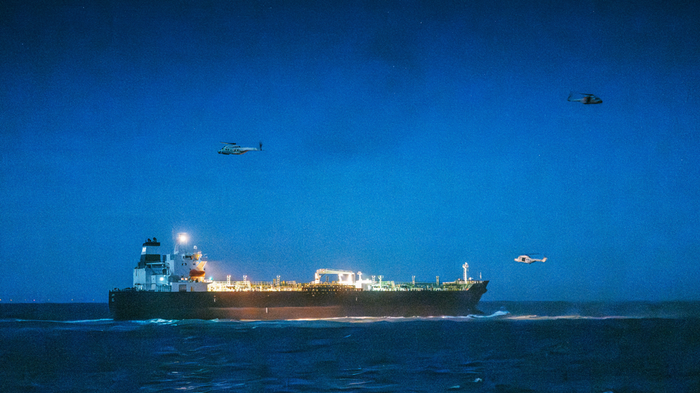
Rusty oil tankers in the shadow fleet, illegal waste shipments in containers and dubious ship insurance will be put under the microscope when researchers at the University of Oslo launch the highly topical project CargoCrime.
-
This is why we are coming together to protest Feb. 17, 2026
It is not only in social media that we express our opinions. Meeting face to face in order to protest may be more important than ever, says rhetorician Kristian Bjørkdahl.
-
Mainland Europe’s largest glacier may be halved by 2100 Jan. 21, 2026
A new study presents projections for Jostedalsbreen in a future warmer climate. Scientists used an advanced computer model to simulate the glacier's melting and dynamics across various scenarios.
-
Norwegian politics: Our system is not well suited to tackle long term challenges Dec. 4, 2025
– There is reason to ask whether our political system with the increasingly fragmented political landscape is set up to solve difficult challenges such as climate change, shifting demographics and the need for economic prioritization, says Kristoffer Kolltveit.
-
Researcher disputes the Gulf Stream is on the verge of collapse Nov. 20, 2025
No, the ocean current that brings warm water along the Norwegian coast will not stop, producing a cold shock or a new ice age. Here you will learn why.
-
International standards can succeed where negotiations fall short Nov. 19, 2025
International political cooperation on issues such as climate, trade and health is becoming increasingly difficult. International standards developed quietly by experts have become an important alternative, new research shows.
-
Climate risk may slow the green transition Nov. 5, 2025
The notion that climate policy decisions will erode the financial sector’s asset values has been used to mobilise finance for the green transition. It creates a void for action in which the financial industry waits for climate policy, while politicians wait for finance.
-
Ship’s logs have shaped our understanding of the sea Oct. 31, 2025
Old logbooks are important for climate science today, but even in the 1800s, amateur researchers used these weather observations to understand the ocean.
-
Do you feel that climate engagement is pointless? A story from the 18th century may offer hope Oct. 1, 2025
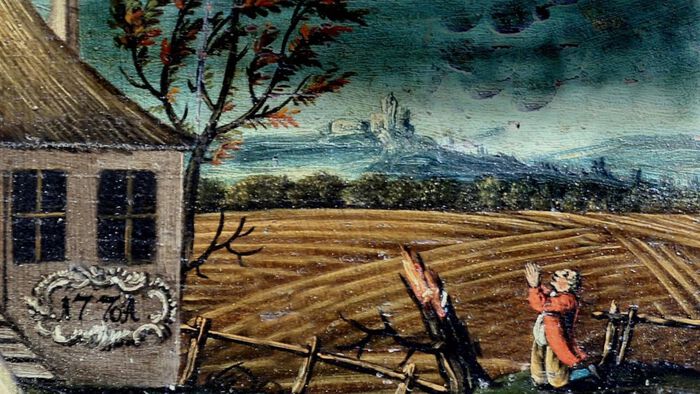
A parish priest and scientist worked hard to create change when a climate crisis struck. He did not know it when he died, but his efforts would yield results.
-
Extreme heat in large cities: Climate risk and public health Sep. 1, 2025
This summer, we have witnessed extensive heatwaves affecting several places in Europe. Overheating can pose significant health risks for vulnerable groups in urban areas.
-
Europe can reach its Zero Emission goal in many ways Aug. 29, 2025
Researchers have created an energy model to find different ways for Europe to be climate neutral by 2050. The good news, is that there are many ways to achieve this goal.
-
Inevitably, the glaciers are shrinking, but stricter climate policies could save twice as much ice mass May 30, 2025
The world's glaciers are melting, and this affects communities and the natural environment. Climate policy can preserve more ice mass, researchers point out.
-
How should we get rid of CO2? These scientists want to turn it into stone May 27, 2025
Nature got there first: When CO2 reacts with volcanic rock, it transforms from a greenhouse gas into solid minerals.
-
We tend to avoid information about possibly negative consequences of our choices for others – unless that knowledge is forced upon to us Apr. 9, 2025
It is tempting to make decisions that primarily benefit ourselves and to turn a blind eye to any resultant discomfort for others. However, when others impart to us the information we may have attempted to evade, most of us choose to act in solidarity.
-
Do you believe Antarctica is a pristine paradise? Think again Mar. 26, 2025
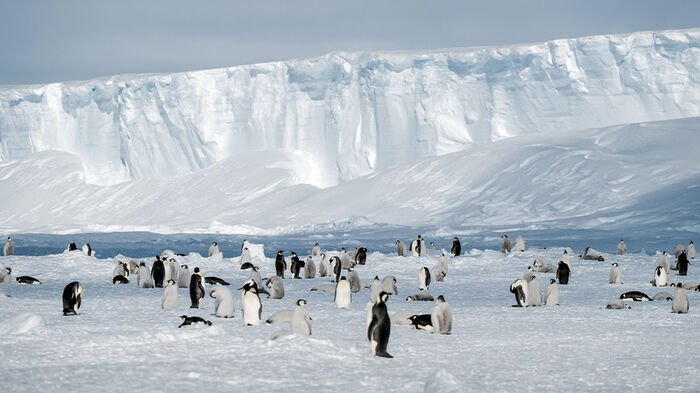
The perception of Antarctica as an apolitical haven with untouched nature solely dedicated to scientific research is entirely mistaken, according to researcher.