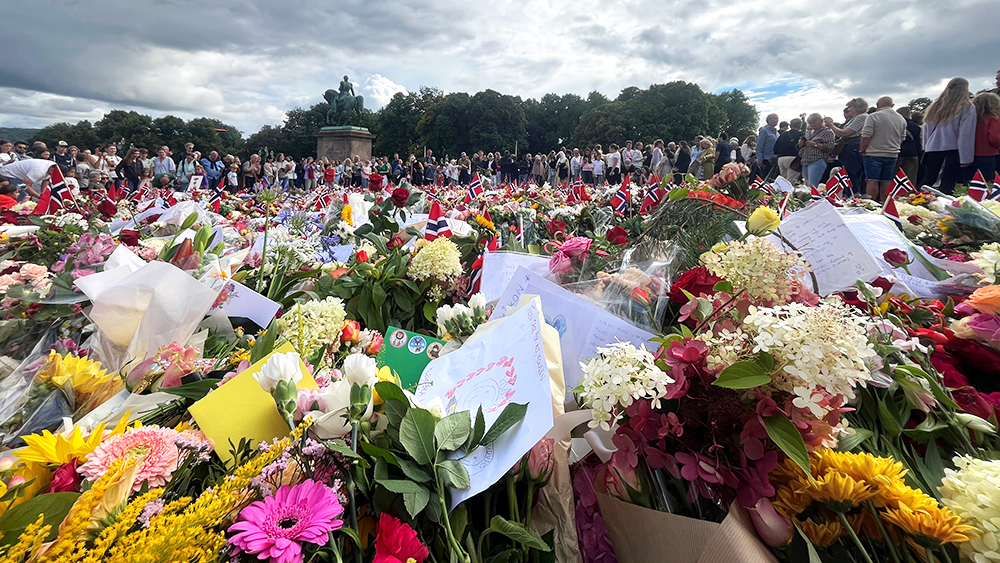
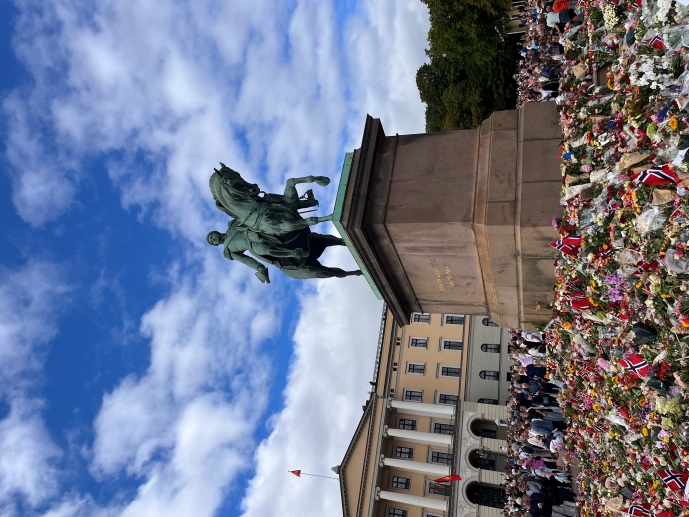
Already when it was announced that King Harald V’s condition was “very serious”, people began going to Palace Square to lay flowers. All of Norway held its breath and was glued to television screens, following the rolling news coverage.
A group of cultural historians immediately sprang into action, beginning intensive fieldwork that would continue for several weeks.
What happens when a king dies? How do people mourn through ritual? And how does this grief differ from previous national commemorations of mourning?
You have to be there to understand
“As ritual researchers, we know that people need rituals. We need outlets through which to express things together,” says Ane Ohrvik, Professor of Cultural History at the University of Oslo (UiO).
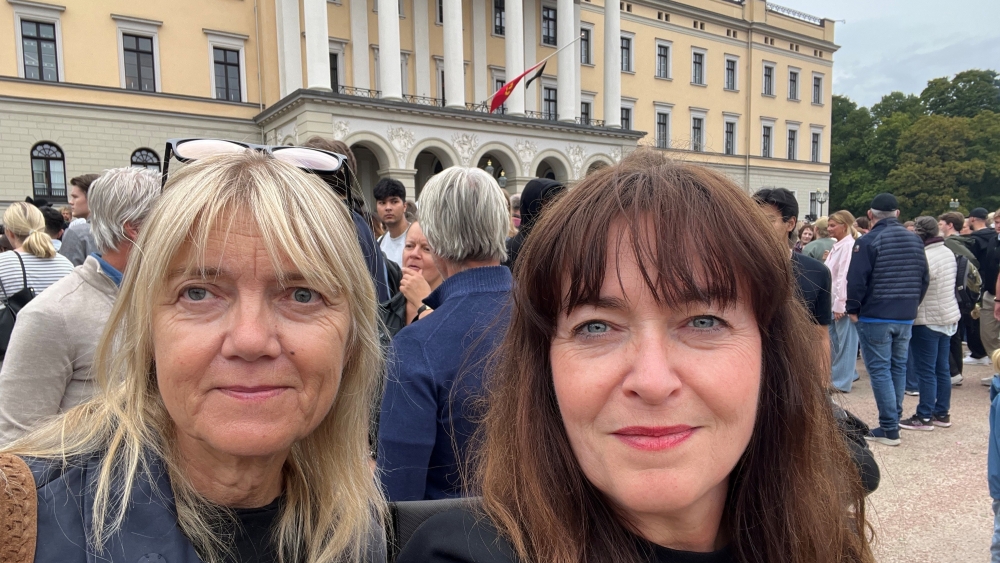
She and her UiO colleague Line Esborg, also a Professor of Cultural History, were quickly on the scene in central Oslo to observe and try to understand what was happening, as it happened, and why.
“The power, scale and duration of people’s participation is probably what has surprised me the most,” says Esborg.
Together with Ida Tolgensbakk, Senior Curator at the Norwegian Museum of Cultural History, and Kyrre Kverndokk, Professor of Cultural Studies at the University of Bergen, they observed how people took part in the public mourning, both at Palace Square and elsewhere in the country.
It is, of course, impossible to gain the same understanding from photographs alone.
“We go out into the field in this way because we believe something special is happening there and then, as people take part. It tells us something essential about the society we live in: what people care about and how they want to express it,” says Ane Ohrvik.
Not a new phenomenon
Although grief is taking new forms, the researchers have found that the spontaneous memorial events following King Harald’s death are not a new phenomenon. They are based on a familiar ritual language.
“The various ritual elements are probably much older than we first assumed,” says Ohrvik.
King Olav V’s death in 1991 is regarded as Norway’s first major spontaneous public commemoration, when a snow-covered Palace Square was filled with candles, flowers and drawings. But, as it turns out, it began much earlier.
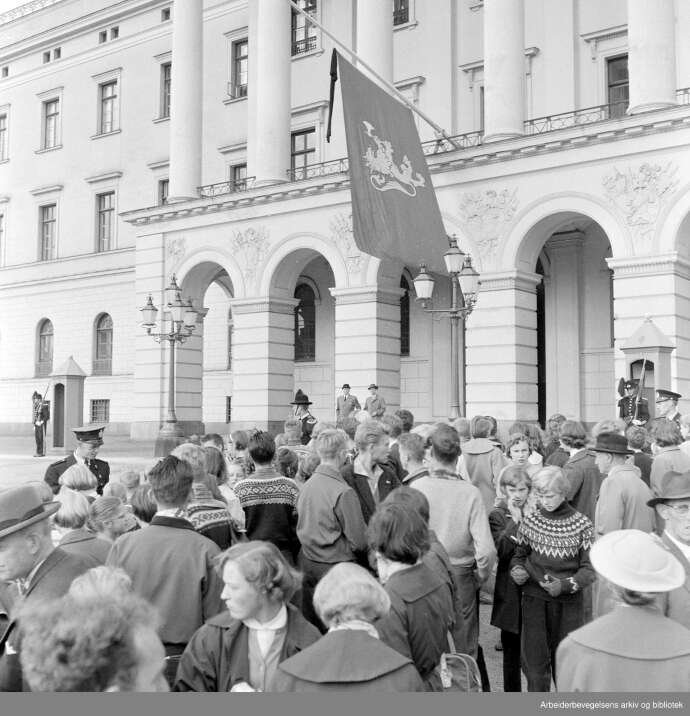
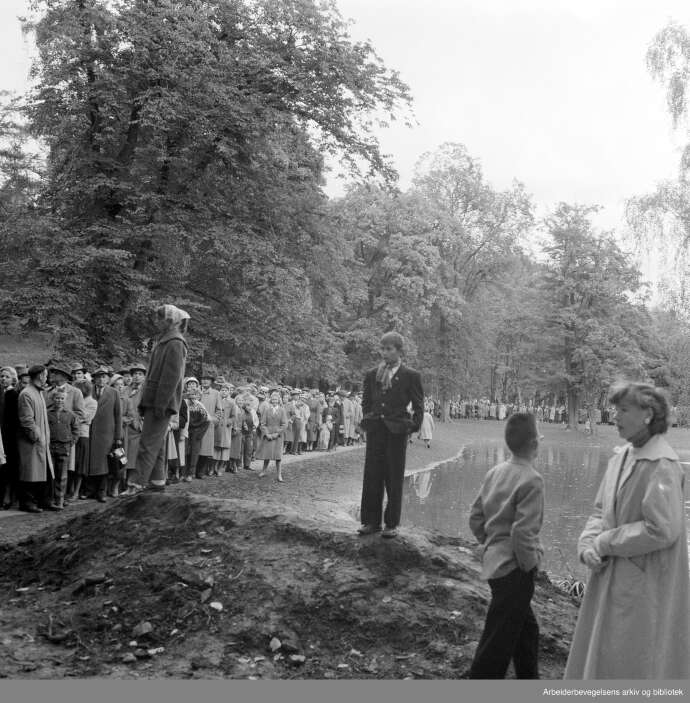
“I actually brought along and printed some photographs from King HaakonVII’s death in 1957, because I find them interesting,” says Esborg, showing historical images of people gathering at Palace Square. Some had waited through the night for the latest news about the king.
The next photograph shows school children standing in front of the Palace, and the mourning drapery hanging from the Palace balcony is recognisable.
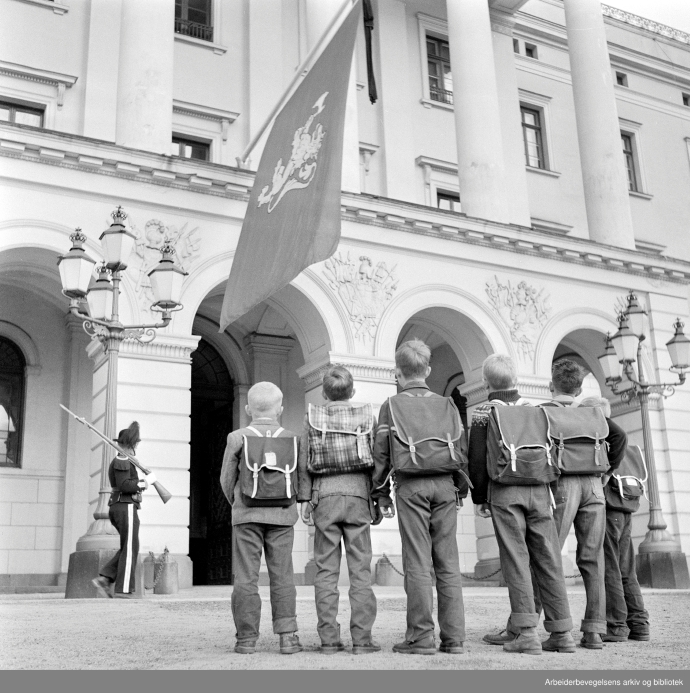
Although there was not a sea of flowers in the square as there had been following King Harald`s death, flowers were sent directly to the Palace, and florists’ delivery drivers travelled back and forth continuously.
“Many of the elements we see now can be traced back to 1957. Here, for example, you can see the queue of people filing past King Haakon’s coffin. We can see that people were queuing in roughly the same place as they did this time. It reflects what we observed and the photographs we took ourselves. These images are publicly available, of course, but we had forgotten them,” says Line Esborg.
Sharing private grief
In addition to observing people’s participation in memorial rituals in and around Palace Square, the researchers have combed through social media. What is new is the way grief unfolds digitally, through photographs, shares and personal tributes on social platforms.
“We can see that the boundaries between the private and the public are becoming blurred, creating a strong need to document one’s own participation,” says Esborg.
Several people created their own memorial boards featuring pictures of King Harald and photographs of themselves with the king, as well as photographs of their own deceased family members.
People wanted to share their own personal experiences of meeting King Harald, and several filmed themselves crying or laying flowers at Palace Square.
“The fact that people go public by filming themselves and talking about their grief over King Harald, but also their own grief over family members they have lost, is new because of the media landscape,” she says.
For many, their grief over King Harald was also connected to losses of their own.
“Such major rituals can also accommodate other things. We are both surprised by how much this has opened up a space for processing other grief as well,” says Ohrvik.
Children incorporated into the ritual
The cultural historians were struck by how the atmosphere at Palace Square changed when the announcement came that King Harald had died.
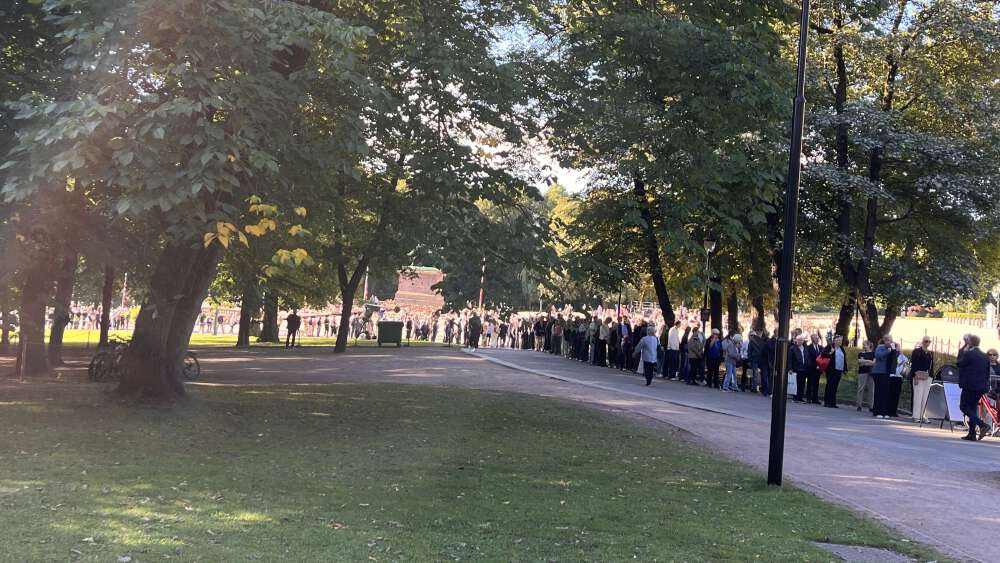
“The reaction was spontaneous. We saw Palace Square change from being relatively empty to becoming crowded in a fascinating way within an hour. And the queues outside nearby florists grew longer and longer,” she says.
Suddenly, Palace Square was full of people.
For the ritual researchers, it is particularly interesting to observe how children, including those of nursery age, are incorporated into the ritual.
“Children learn mourning rituals early. We saw them, wearing high-visibility vests, walking in lines while holding on to ropes as they made their way towards the Palace to lay down drawings and flowers. For many, it was a memorable introduction to ritual,” says Ane Ohrvik.
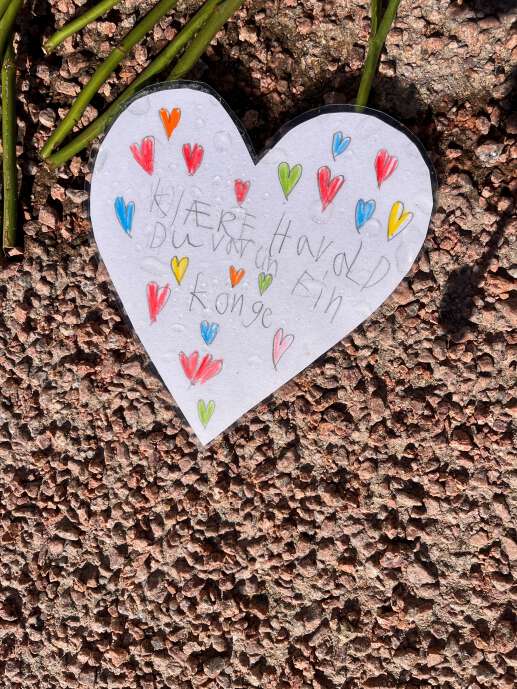
Another typical image is that of a mother and child with flowers at Palace Square.
“It was very telling that flower-laying was so often filmed. A mother would film her child laying down a flower, and we know that many of these videos ended up on social media. It became a kind of double communication,” says Ohrvik.
“Absolutely, and it shows the whole sequence of the ritual. The first image is ‘here is the bouquet in hand’, on the way to Palace Square; then we see the child laying the bouquet down in the square itself,” Esborg continues.
Nurseries and schools were present throughout. Later, employees from companies also came to the Palace to lay flowers together.
“Different kinds of groups found their own place within this mourning ritual,” says Ohrvik.
A strange silence
Then, on 9 September, it is time for the King’s funeral.
“I think everyone who was in central Oslo that day can testify to the very, very special feeling of walking through a completely silent city, where so many people were gathered within such a small area,” says Line Esborg.
It is one thing to hear news channels report that the whole city is silent. It is quite another to stand in the city and experience it yourself.
“Without fieldwork, it would have been difficult to understand that silence: why people were silent and how they expressed it. Line and I needed to talk together about what we were going to do and where we were going to go,” says Ohrvik.
“And finding yourself walking around whispering was strange. If we had not done so, we felt that we would be disturbing the gathering, and that is a very unusual feeling,” Line Esborg continues.
Important for the national memory
The cultural historians have previously documented, among other events, King Olav’s death, the Crown Prince’s wedding, the centenary of the dissolution of the union between Norway and Sweden, the 22 July attacks and the pandemic.
They have now collected an extraordinary amount of important documentation in the weeks following King Harald’s death, including from memorial events in other cities. It is a broad body of material that leaves scope for further research.
“We do this because we believe it tells us something essential about the society we live in: what people care about, or want to care about; how people want to express grief; and how they find ways of doing so. As cultural historians, it is vital for us to understand this in context,” says Ane Ohrvik.
And although the rituals follow a familiar ritual language, the cultural historians have been surprised by their sheer scale.
“We have been struck by the number of flowers, the number of people, how long it lasted, and how these commemorations opened up a space that people filled. Everything culminated in King Harald’s death. More than a month after his death, people were still laying flowers at Palace Square, with messages to the late king and to the new royal couple,” says Ane Ohrvik.
Her colleague Line Esborg adds:
“The cultural-historical documentation we have carried out is essential to the national memory. Without it, it is difficult to understand who we are and the times in which we live.”

