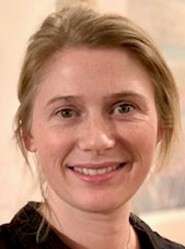
What was your path into INTED and interdisciplinary education?
My path into interdisciplinary education began with a realization: here was a field that put words to challenges and opportunities I had long observed in teaching and learning environments. As an educator with extensive experience from the natural sciences, I have worked closely with both students and teachers, and I’ve seen how many challenges in the learning environment stem from a lack of coherence and communication across disciplines. When I discovered interdisciplinary education as a field, it suddenly made sense: here was a framework that could explain and improve the complexity we work in. Interdisciplinary concepts have helped me understand why certain challenges arise, and how we can address them better.
What are your main responsibilities in INTED?
My role spans many different tasks, from daily operations to larger development projects in education. A central part of the work is contributing to the development of interdisciplinary teaching principles and supporting academic communities that want to explore or establish interdisciplinary offerings.
Many courses and programmes have different intentions, but a common denominator is the need for good forms of collaboration. Here, INTED serves as an important support by contributing methodology, structure and academic assistance. I see INTED as a contributor to exploring issues within the scholarship of teaching and learning. We have the time and capacity to investigate, test and share “best practice,” so that interdisciplinary education becomes an integrated part of teaching.
What do you see as the potential of interdisciplinary education?
Traditionally, we have divided knowledge into categories and disciplines, but reality does not lend itself to being divided in the same way. Interdisciplinary education creates space for questions that require several perspectives and understandings at the same time. It helps students and teachers handle complexity, and it prepares us for a world in which this is a basic condition.
Is it difficult to achieve interdisciplinary education?
Both yes and no. When we introduce more complexity—more subjects, more perspectives—it becomes more challenging to design coherent learning experiences. Universities are built around academic disciplines, and working across them is demanding. Creating good interdisciplinary offerings therefore requires both structural changes and cultural changes.
Why is INTED important, and how does the centre support programmes at UiO?
We have room to explore. By having dedicated resources, we can go in depth, develop expertise, and support academic communities that want to try new approaches. For me, it is first and foremost about building culture, community, and a shared language around interdisciplinary teaching. We want to create arenas where academic communities can learn, explore and develop together. This involves both offering support and sparring to environments facing concrete challenges, and contributing to teaching design and development processes. Equally important is establishing meeting places for discussion, reflection and the sharing of experiences, as well as organizing workshops and other competence-building activities. INTED also runs the Interdisciplinary Facilitator Programme, which gives learning assistants tools they can use as support in interdisciplinary learning environments. Taken together, we work to build a robust, sustainable and knowledge-based system for interdisciplinary education at UiO.
With interdisciplinarity on the rise, what is the future of higher education?
Higher education reflects both the research front and the needs of society. As research increasingly raises complex issues that require interdisciplinary perspectives, it is important that our educational programmes do the same. An important realization for me is that we should not be interdisciplinary for the sake of interdisciplinarity itself, but be driven by a desire to explore truths.