
The innovation unit the UiO Growth House helps researchers at the University of Oslo to mature early phase innovation ideas. As a part of this the Growth House issues a call for seed funding for researchers every year.
For the call this fall, the UiO Growth House received 44 qualified applications – 15 for seed I where the maximum amount is NOK 50 000, and 29 for seed II where the maximum amount is NOK 200 000. Of these, 14 have been granted seed I on NOK 50 000 and 5 seed II on NOK 200 000 – in total NOK 1.7 million.
In the projects that receive seed funding II, the researchers are aiming at developing treatment for solid tumours, resistant fungi, blood cancer, and inflammation and to test a new type of aquafeed.
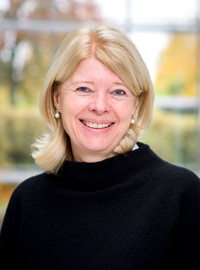
– The most important task of the UiO Growth House is to strengthen the innovation culture. We have seen that even small amounts such as NOK 50 000, can be sufficient to get started on maturing an innovation idea in the early phase, says innovation director in the UiO Growth House, Hilde Nebb.
This was the fifth year with call for seed funding from the UiO Growth House. All the applicants will now be offered follow-up from the innovation advisers in the Growth House.
The applications for seed II have been evaluated by a panel with representatives from the incubators Aleap and ShareLab in Oslo Science Park, Oslo Cancer Cluster Incubator, SINTEF, and the innovation programme SPARK Social Innovation at UiO. The applications for seed I have been assessed by the innovation advisers in the UiO Growth House.
Projects that are granted support
This time all the researchers who have been granted support, come from the owner faculties of the UiO Growth House – the Faculty of Mathematics and Natural Sciences (MN) and the Faculty of Medicine (MED).
Project title, project leader, faculty, department/centre – alphabetical order based on the first name of the project leader.
Seed funding II NOK 200 000
- Cereal-leaf Protein for Aquafeed
Camila Esguerra, MED, The Norwegian Centre for Molecular Biosciences and Medicine (NCMBM) - Bridging the metabolic mismatch between CAR T cells and solid tumors
Emma Berge, MED, Institute of Basic Medical Sciences - A new class of compounds that restores the potency of existing antifungal drugs against resistant fungi
Jorrit Enserink, MN, Department of Biosciences - Succiplus: development of a succinate analogue suitable for therapeutic applications
Lorena Arranz, MED, Institute of Clinical Medicine - First-in-Class Pro-Resolution Activators
Trond Vidar Hansen, MN, Department of Pharmacy
Seed funding I NOK 50 000
- A Modular Drug Delivery Platform for On-Demand Assembly of RNA Therapeutics
Ahmed Amer, MN, Department of Pharmacy - New oxide families for PGM capture
Anja Olafsen Sjåstad, MN, Department of Chemistry - PRIORITY
Carl Tollef Solberg, MED, Institute of Health and Society - Can cognitive functions be enhanced by natural substrates?
Farrukh Abbas Chaudhry, MED, Institute of Basic Medical Sciences - Treatment of heart failure
Finn Olav Levy, MED, Institute of Clinical Medicine - Personalized Biomarker Patterns for Early Disease Detection
Glenn Kristiansen, MN, Department of Informatics - Personalized adjuvant treatment decision in Renal Cell Carcinoma
Helene Knævelsrud, MED, Institute of Basic Medical Sciences - Inhaled siRNAs Targeting YAP and β-catenin for Idiopathic Pulmonary Fibrosis
Håvard Attramadal, MED, Institute of Clinical Medicine - POLARIS – Fluorescence-free super-resolution microscopy
Kay Oliver Schink, MED, Institute of Basic Medical Sciences - NeuroPlacenta-on-chip
Ludivine Delon, MED, Institute of Basic Medical Sciences - Liver-Slippery Nanovesicles for Enhanced Targeted Delivery
Marit Inngjerdingen, MED, Institute of Clinical Medicine - CARE-SENSE: Privacy-Preserving Multimodal AI for Personalized Human-State Awareness
Rabindra Khadka, MED, Institute of Clinical Medicine - HealthX – Serendipity Lab
Truls Erikson, MN, Department of Informatics - Non-contact ultrasound stimulator for cells in standard culture dishes
Xian Hu, MN, Department of Biosciences