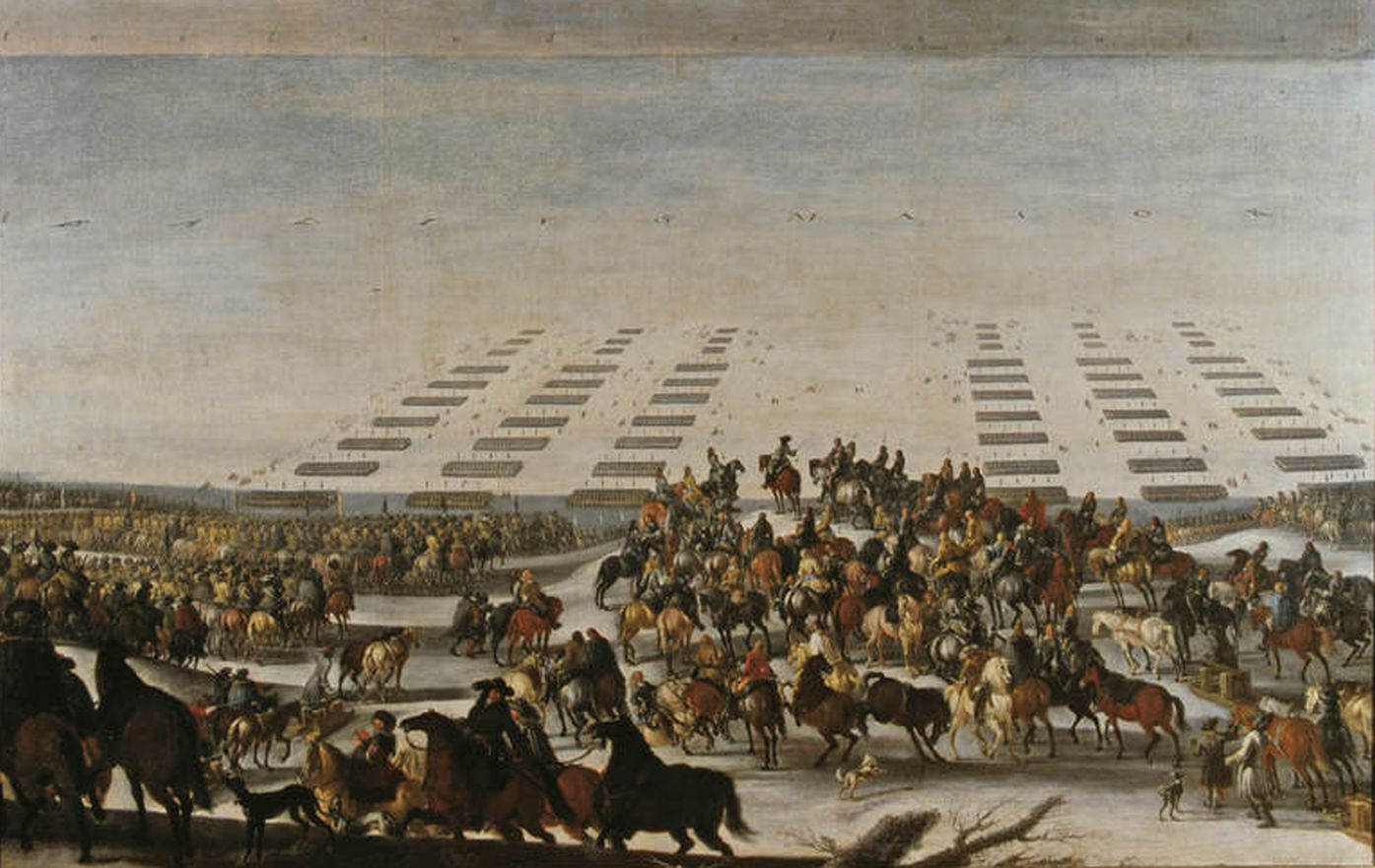


What happened the last time Nordic societies encountered rapid climate change? How did natural and social environments interact during the Little Ice Age (1300-1900), the Late Antique climate anomaly (500-700) and in response to major volcanic events (i.e. the 530s, 1250s, 1690s)?
What can be learned from the ways people adapted to these challenges in the past that are in many ways similar to the ones we face today?
About the project
The Nordic Climate History (NORCLI) research group studies past climate shifts to help us situate current challenges. It uses a novel socionatural approach that integrates climatology, history, and museology. It does so because to make climate science relevant, its models need to be related to human experience. The past offers a rich repertoire of such ‘lived interactions’.
In 2024/2025 the project will team up with a research group on the Nordic Little Ice Age hosted by the Center for Advanced Studies, Oslo. You can read some press articles about our research following the links below:
- Do you feel that climate engagement is pointless? A story from the 18th century may offer hope
- For noen hundre år siden var det en liten istid. Kan vi lære noe av den?
- 500 år gamle dagbøker avslører hvordan livet med ekstremvær artet seg
- Klima kan utløse hungersnød, men er ikke avgjørende for hvor hardt den rammer
Key events
- 16/17 June 2027 Workshop: Altered Trajectories. Extreme winters as ‘compound events’ of socionatural transformations (1500-1900). CUNP Paris.
- 15. Juni 2026: Online course launched: The Nordic Little Ice Age (see here)
- 1. August 2025: Book launched: "Nordic Climate Histories. Impacts, Pathways, Narratives." Available from the White Hourse Press online as a PDF (and in print).
- 2/3 June 2025: Conference: The Future of Past Climate. Learning from the Nordic Little Ice Age
- 17 March 2025: Exhibition opening: The Little Ice Age. How did we handle the last climate crisis? (Klimahuset Oslo). Find the 3D-virtual and the web-exhibition here.
- 28/29 November 2024: Workshop: The Laki Eruption 1783 as a Nordic Event
- 10/11 October 2024: Workshop: The Little Ice Age – Timespan, Boundary Object, Narrative
- 01 August 2024: Start of the CAS-group NORLIA (The Nordic Little Ice Age)
- 23/24 May 2024: Conference: Nordic Climate History
Interdisciplinarity
Climate history is an emerging research field. It is characterized by “big interdisciplinarity” connecting scientists, historians, and societal stakeholders.
The Thematic research group "Nordic Climate history" (NORCLI) is hosted jointly by the faculty of mathematics and natural sciences (MATNAT) and the faculty of humanities (HF). It connects recent top-level research groups across these fields at UiO (CLIMCULT, VIKINGS) and put them in conversation with key researchers across Europe that will take residence in Oslo in 2024/25 (CAS groups NORLIA + CLIMCRIS) as well as regional stakeholders (KLIMAHUSET).
NORLIA will proceed in three steps: (1) reconnecting available data from both the archives of nature (tree-rings, climate model data) and the archives of society (historical records, material culture) with a focus on extreme events initiated by abrupt climate change in the last two millennia; (2) integrating interactions ‘from agriculture to culture’ bringing scientists and historians together at eye-level; and (3) narrating results to a wider museum and societal audience via an exhibition and participatory events at Klimahuset Oslo in spring 2025.
Objectives
The objectives of the project are threefold. It will:
- establish ‘climate history’ at UiO and position the university at the centre of this emerging field
- fill current knowledge gaps by integrating climate change and "lived" human experience
- broaden our societal repertoire for climate adaptation measures.
Workshop: Altered Trajectories
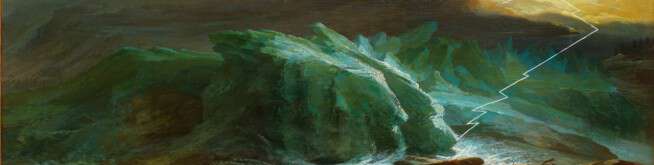
Registration is now open for the CAS/NORCLI workshop: Altered Trajectories. Extreme winters as ‘compound events’ of socionatural transformations (1500-1900). It will be held on June 16/17 2027 in Paris. The deadline for submissions is 15.11.2026. More information here.
Book: Nordic Climate Histories
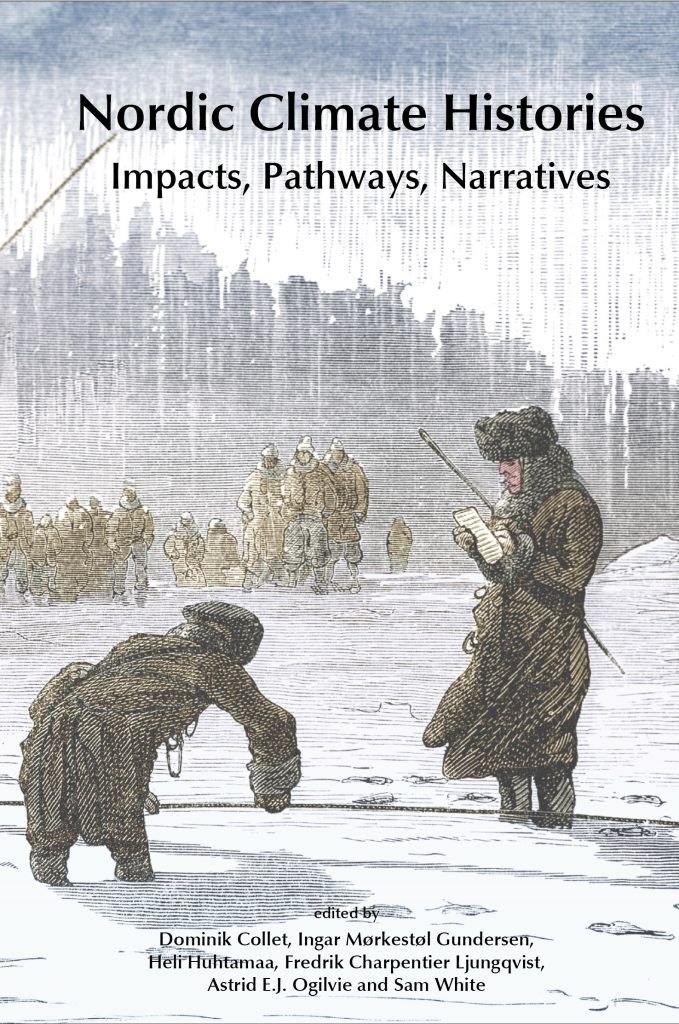 The project published a comprehensive book gathering research from across the Nordics in a single open access volume. The book is available from the White Hourse Press online as a PDF (and in print).
Down the centuries, the people of the Nordic countries have confronted challenges from climatic variability and change and sought ways to survive and adapt. In a time of accelerating global warming, these climate histories take on new contemporary significance. Drawing on tools from the natural and historical sciences, the innovative scholarship in this volume addresses questions such as: How did Nordic societies cope with past climatic hazards? What was the historical significance of the ‘Little Ice Age’ or the ‘Medieval Climate Anomaly’ for Nordic countries? And how do we study, narrate and learn from these past experiences?
Reference to the book:
Collet, D., Gundersen, I. M., Huhtamaa, H., Ljungqvist, F, C., Ogilvie, A., and S. White (eds). 2025. Nordic Climate Histories, Impacts, Pathways, Narratives. The White Horse Press. ISBN 978-1-912186-98-3 (PB) £30, 360pp | eISBN 978-1-912186-99-0 (Open Access eBook)
Online course: The Nordic Little Ice Age
We have launched a dedicated free-to-use online course. It explores interactions between historical societies and their environments during a period of colder climate ca.1300–1850CE, known as the “Little Ice Age” (LIA).
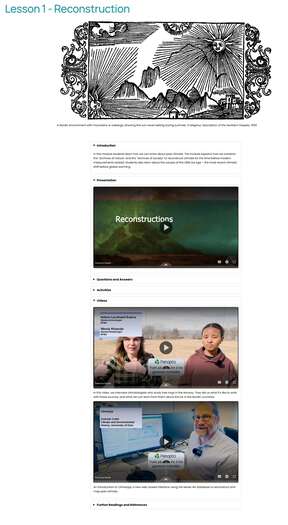
The course encourages students to investigate how stories of disasters, adaptations, and resilience in the face of past climate variability and extreme weather might help us prepare for global warming in our own times.
The course consists of six lessons course with videos by leading experts, commented data, sources and suggested activities. It is aimed at high-school students and provides their teachers (in science, history and social studies) with material on the subject of “sustainability studies” that Nordic teaching plans now increasingly require.
The course was created in cooperation with the Little Ice Age project at the Center for Advanced Study, Oslo and the NORCLI project.
You can access and use the course for free here: climatehistory.net, Canvas (fully exportable) and Norgeshistorie.no (forthcoming). All videos are also available on the courses dedicated youtube channel.
Cooperation
- CLIMCULT
- VIKINGS
- NORLIA CAS-group (The Nordic Little Ice Age)
- FORCE-VOL
- CollaboratoryCurating Climate
- VICES (Volcanic Impacts on Climate, Environment and Society)
- Adaptations to climate change in the northern Baltic region ca 1500–1900
- Climate, crops and crisis? Examining agricultural adaptation and resilience to climate change in prehistory
- The NTNU University Museum
- Klimahuset/The Climate House Oslo
Financing
NORCLI is financed by UiO:Energy and Environment, University of Oslo, Norway.