Knowledge
After completing this programme, you will have
- an understanding of complex technology-related challenges within the context of systems science and engineering:
- You understand the complexity of real-world technology-related challenges.
- You are familiar with the main principles of systems science and engineering.
- You demonstrate in-depth understanding of systems thinking approaches.
- You have specialised knowledge within one or more technology systems domains, such as renewable energy, robotics, space technology, societal security, and healthcare systems.
- a solid foundation in the core technology domains, including
- fundamental principles of programming, mathematics, physics, data science, and artificial intelligence, and how to apply them in different technology systems
- ethical, legal, societal, economic, and environmental considerations related to various technology systems
- innovation and sustainability in the context of technological development and change
Skills
After completing this programme, you will have
- the ability to design, build, and analyze complex technology systems:
- You can break down complex problems, assess system behaviors, and apply logical reasoning to find effective, scalable solutions.
- You can engage in cross-disciplinary design processes, applying engineering principles to create functional systems that integrate hardware, software, data, and/or people.
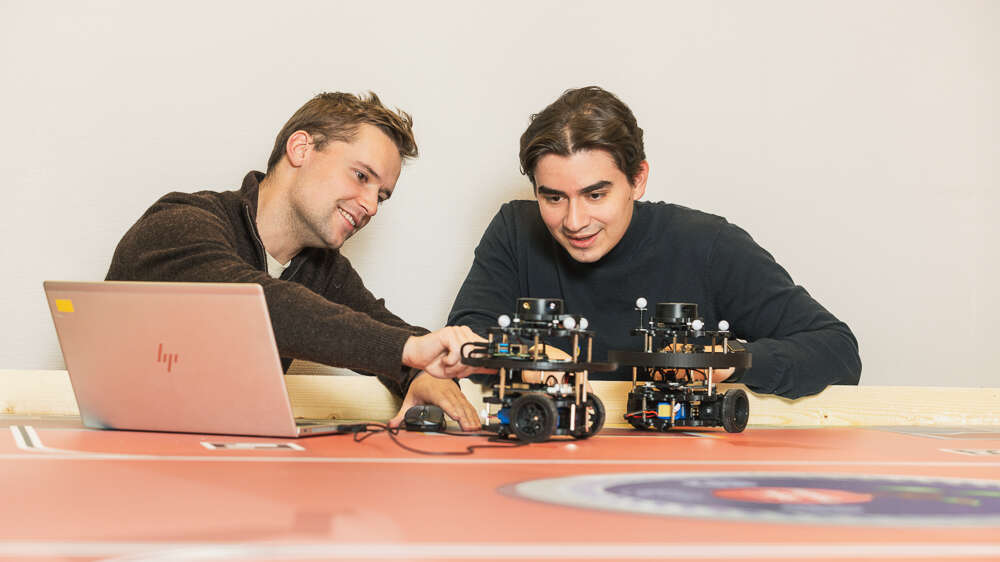
- You can apply theoretical knowledge in practice through hands-on work with hardware, software development, rapid prototyping, and physical troubleshooting, including participation in labs, workshops, and real-world challenges.
- developed and practiced skills in scientific collaboration, communication, and writing:
- You can work in diverse teams and share knowledge and perspectives to co-create solutions while demonstrating strong communication and collaboration skills.
- You know how to document, present, and communicate technology concepts clearly and effectively to both technical and non-technical audiences.
- You can apply scientific literacy and research competence when engaging with emerging technologies.
General competence
After completing this programme, you will have
- the ability to take responsibility for your own work and learning:
- You demonstrate autonomy and self-direction by identifying opportunities, setting goals, and executing technical work independently in both academic and applied settings.
- You have developed the mindset and habits of curiosity and lifelong learning and are able to build new skills to stay effective and relevant in dynamic technical environments.
- competence in critical thinking and informed decision‑making:
- You can apply critical thinking to analyse multifaceted challenges, define problem scopes, and articulate solution pathways that are technically and practically feasible.
- You can evaluate trade-offs and make responsible decisions that balance innovation, practical impact, and ethical considerations.