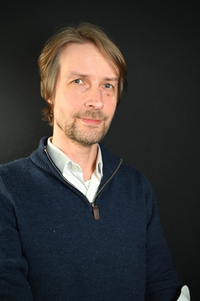
What was your path into INTED and interdisciplinary education?
I was involved in the Honours Programme, which is one of the university’s central interdisciplinary flagships, and I was invited into INTED already during the application process. Through my work with Honours, I already had experience with this group of students. I also have an interdisciplinary or multidisciplinary background, in that I completed a degree in Informatics at the Faculty of Mathematics and Natural Sciences, and clinical psychology at the Department of Psychology. I’ve been fortunate to belong to two quite different academic worlds and environments. When you open up in that way, you become better at communicating and collaborating with people who see the world differently from yourself. And that is very enriching and valuable when working across disciplines.
You are course coordinator for HON3000, which is part of the Honours Programme. What makes the course interdisciplinary?
When the Department of Psychology (PSI) was given responsibility for the third year of the Honours Programme, we had to decide what we wanted students to take away from it. So we worked closely with INTED to clarify the interdisciplinary aims, and we drew on INTED’s experience with interdisciplinary education. The third year is based at the Faculty of Social Sciences, so we had to think about which issues affect society from that perspective. And that is of course the rise of artificial intelligence.
Previously, the students worked in groups on concrete tasks, where the point was to draw on different types of expertise. Now we have tested other pedagogical tools such as pure debate and problem-oriented approaches. HON3000 has therefore become a forum where students explore how AI affects individuals, society, democracy, and professional practice. Simply placing students with different academic backgrounds in the same room does not in itself make the teaching interdisciplinary; there is no integration between the subjects. It is only when they work across disciplines, in both content and form, that interdisciplinary learning truly happens.
What do you think students gain from participating in interdisciplinary learning environments?
Students who take part in interdisciplinary learning environments gain new perspectives on both their own discipline and others. You develop a better understanding of your own field by contrasting it with others, and I believe it also creates a certain humility toward your own discipline. Not every subject can contribute to every problem, but you see different academic standpoints and the value of other types of expertise. I think interdisciplinary learning environments foster greater respect for others, while at the same time making students more curious and more collaboration-oriented.
What do you see as the potential of interdisciplinary education?
I believe it is enriching in many ways. Having studied both social sciences and natural sciences, I feel that this has deepened my understanding and shaped the way I see the world. Even though there is always a discussion in higher education about depth versus breadth, I think it is a bit like travelling and experiencing other cultures: it gives you a different gaze and new ways of seeing the world. I believe that breadth in perspectives also influences how you approach problems.
Even though it has sometimes been challenging in my own career to have such a broad background, I would say that the overall gain has been substantial. Research on attitudes also shows that those who have been in contact with multiple academic environments are often more open to the idea that others have valid perspectives. It builds respect, better communication, and understanding of how others can contribute in ways that complement one’s own field. Interdisciplinary arenas create space for such encounters and can open our eyes to new insights.
Why is INTED important?
INTED plays an important role in bringing together, supporting, and connecting academic communities across the university. The centre contributes tools, institutional knowledge and pedagogical expertise, and has become an arena of activity for those who want to develop strong interdisciplinary teaching designs. We have contacts around the world concerning how to support interdisciplinary education, and we are constantly learning. Many of the approaches we have implemented in HON3000 would not have been possible without INTED’s support.
With interdisciplinarity on the rise, what is the future of higher education?
When we look at the future of higher education, we find ourselves in the midst of a transformative development driven by artificial intelligence. It is changing what higher education is and what it should be. AI is inherently interdisciplinary and accessible to all disciplines, and can draw on knowledge from every field to integrate new understanding. This pushes us to ask what is actually worth learning.
Skills that used to be central, such as learning to code, have taken on new meaning in light of AI tools that can do much of the work. It may be that a strong focus on specialization becomes less important when we have support tools like AI, but at the same time no one really knows what will matter most. Everything is developing at a tremendous pace. It is difficult to predict which skills will be most important in the future, but it is likely that interdisciplinary programmes will gain importance, especially in the face of technologies that fundamentally change working methods and knowledge practices.
I believe this strengthens the need for humanistic and holistic perspectives combined with interdisciplinary competence. The ability to lift one’s gaze, think in terms of principles, wholeness and connections, as well as skills related to reflection, will probably become very important in the years ahead.