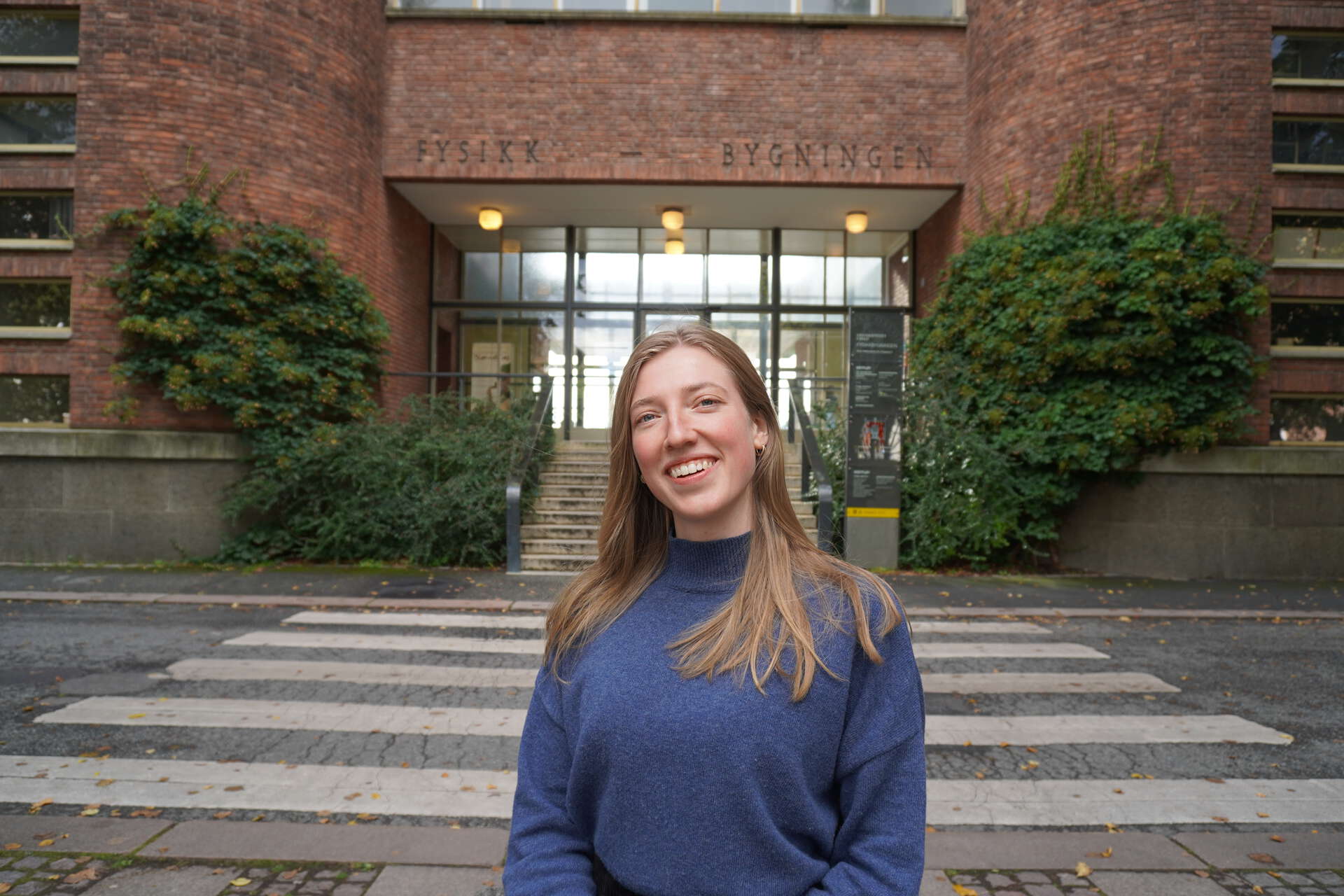
What sparked your interest in applying for an interdisciplinary PhD?
There were probably two main reasons. One was the opportunity to work with Tor Ole and Anders as supervisors. The other was the project itself. Initially, I was expected to work on embedding models together with other PhD candidates, but I found myself more interested in asking fundamental questions about the models rather than using them as tools for analysis. The position was also advertised as an interdisciplinary PhD, and they were specifically looking for someone with a background in AI. Since I was planning to move to Norway, the position seemed like a great fit. My own academic background has always been interdisciplinary. I studied computer science, but for my bachelor's thesis I moved into linguistics and language technology. In practice, I built computer models to test theories about of how children acquire language, and compared it to real speech data. After that, I worked for a year at Cambridge Assessment on a teaching platform for English language learners, where we used cognitive models to make personalized the learning paths for each student. Later, I deliberately chose cognitive science for my masters because it is an interdisciplinary field. My master program itself emphasized interdisciplinarity, and students could shape their own academic profiles. We specialized in three out of several disciplines, while also participating in seminars that brought students from different fields together.
Can you tell us a little about your PhD project?
My research asks a fundamental question about large language models. As these models become increasingly capable, is it because they are developing internal mental models of how different domains and the world function? Humans have mental models of concepts such as politics, forces, and physical systems. Are language models becoming more competent because they develop and update similar representations of the world? Or is their performance primarily a result of sophisticated question-answer matching and memorized pattern recognition? My goal is to investigate this question in the domain of physics.
What are the interdisciplinary elements of your project?
There are several. First, I come from a cognitive science background. Before arriving here, most of the research I had read focused on how difficult it is to study human cognition, reasoning, and thought processes. In cognitive science, methodology is extremely important because experiments involving people can be messy and difficult to control. When I started working with machines instead of humans, my first instinct was to look for this "messiness" in the machines. Where can experiments go wrong? What sources of error should we be aware of? I brought that methodological mindset with me.
Another interdisciplinary aspect comes from being part of the physics education research environment. I receive a lot of input through that community. I also work as a teaching assistant in an interdisciplinary program and regularly attend presentations in Tor Ole's research group. Educational researchers have developed extensive expertise in assessment and examinations, which turns out to be surprisingly relevant for language model research. Both fields rely heavily on testing their subjects, and there is a lot we can learn from each other. At the same time, my background in computer science allows me to approach technical questions in a systematic way. Not everything needs to be explained through metaphors or broad interpretations. Sometimes it is important to dig into the technical details and understand which specific variables can be changed and how those variables influence outcomes. One thing I have learned from years of programming is the importance of definitions, categorization, and abstraction. If I want to describe a language model, I am often less interested in describing it as a unique instance and more interested in understanding what can be said about language models as a broader category. That way we know how far our knowledge can transfer, and under which exact conditions.
What drives your interest in interdisciplinarity?
For me, interdisciplinarity is about seeing connections and linking different fields together. There is something genuinely rewarding about discovering an unexpected connection. It feels like having a map of a city and then overlaying a map of all the underground pipes and infrastructure. Suddenly, you see relationships that were invisible before. You realize that different systems connect to the same reservoir, or that seemingly separate structures are part of a larger network. That feeling of uncovering hidden connections is what makes interdisciplinarity so exciting to me.
What do you think is the value of interdisciplinary education?
I have been connected to the Honors programme for two years, and one thing I notice in the students is a kind of developmental process. They emerge with a broader perspective and a greater ability to discuss complex topics respectfully. They seem more comfortable engaging with different viewpoints and contrasting perspectives. Part of this is about communication skills, but I also think it reflects a kind of cognitive breadth and flexibility. The discussions that take place in lectures are mostly rich and exploratory, and we consistently discover new ideas and insights through conversations and debates. The students in these environments are willing to share their perspectives and engage seriously with one another.
What do you see as an important next step for advancing interdisciplinarity?
One aspect I value about my connection with INTED is a better understanding of the social and organizational side of interdisciplinarity. There are too few platforms where people from different disciplines can work together in depth. Researchers and students are often located in different buildings, follow different schedules, and face practical barriers when trying to collaborate across disciplines or institutions.
For me, an important goal is therefore to create more platforms and arenas where people can actively work together, develop ideas, and accomplish things collectively. Interdisciplinary collaboration should not be something that happens by chance; we need structures that make it possible. Towards that goal I’m co-organizing an interdisciplinary workshop on Artificial Life, Intelligence, Complexity and Evolution (or ALICE), in Geilo in February!