Nettsider med emneord «postdoc»
This course is targeted on early career researchers such as PhD candidates and postdocs. It will give you an overview of fundamental project management principles and learn how to apply these to academic research settings. Participant will also learn how to utilize this knowledge into transferable skills.

What happens when a robot does not respond quite as quickly as you expect? Even small delays can affect how we experience control, agency and difficulty when interacting with a robot remotely. At this week’s dScience Lunch Seminar, PhD candidate Myrthe Tilleman presents preliminary findings from experiments exploring how latency shapes human-robot interaction, and how neural signals and machine learning could help overcome these delays in future teleoperation systems.
Welcome to this week's lunch seminar in the dScience lounge with Postdoctoral Fellow Azusa Inoue, where she explores how nuclear reactions shaped the first elements in the Universe and whether they could help solve the long-standing cosmological lithium problem.
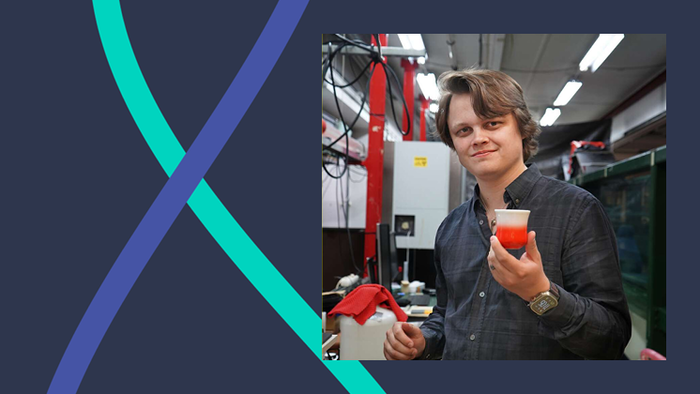
Welcome to this week's lunch seminar in the dScience lounge with Iver Oknes.
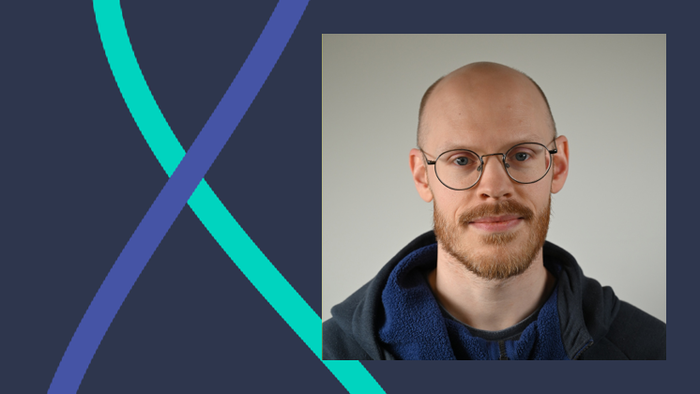
Welcome to this week's lunch seminar in the dScience lounge with Postdoctoral Fellow Viktor Svensson.

Welcome to this week's lunch seminar in the dScience lounge with Juan Pablo Villa Jimenez.

Landmines and unexploded bombs make huge areas of former war zones too dangerous to use, and clearing them is slow and risky. Join us in the Science Library where Associate Professor Tønnes Nygaard will talk about how humanitarian demining works today, and how robots and AI could make it faster and safer.
As a postdoctoral fellow at UV, you are welcome to join our network for postdoctoral fellows.
This course is targeted on early career researchers such as PhD candidates and postdocs. It will give you an overview of fundamental project management principles and learn how to apply these to academic research settings. Participant will also learn how to utilize this knowledge into transferable skills.
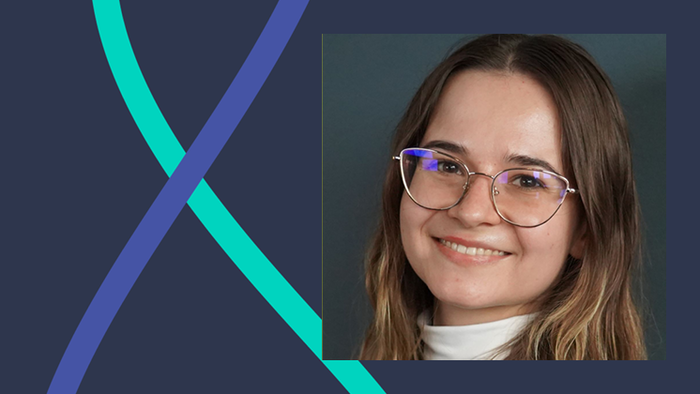
Welcome to this week's lunch seminar in the dScience lounge with Agnieszka Seremak. She will talk about how dehydration in sodium zeolite Y drives cation migration and unusual structural changes, revealed through combined experiments and simulations.

Join us for a lunch seminar with Naomi Lintvedt in the Science Library, where she will talk about how social robots designed as companions can intrude on human privacy, autonomy, and well-being, and how these risks can be reduced.
This week's lunch seminar is cancelled.

Welcome to this week's lunch seminar in the dScience lounge with Erik Sathe, where he will present his research on how bat wing shape and flight dynamics relate to aerodynamic performance and ecology.
Welcome to this week's lunch seminar in the dScience lounge with Oskar Leinonen, PhD Candidate at the Department of Physics. He will talk about designing fast, high-fidelity two-qubit gates – the fundamental building blocks of quantum computing – using electrons on superfluid helium, a promising new platform that could surpass existing technologies in coherence and scalability.

Welcome to this week's lunch seminar in the dScience lounge with Mohamed Aziz Boukraa.

Welcome to this week's lunch seminar in the dScience lounge with Postdoctoral Fellow Camilla Lingjærde. She will present why many machine learning models fail in new environments and introduce Constrained Random Forest, a method for learning predictive patterns that remain stable when conditions change.

Join us for a lunch seminar with Professor Kjetil Tasken in the Science Library. He will talk about how artificial intelligence can be used to harness growing healthcare data to improve research, clinical decision-making, and the efficiency of future healthcare systems.

Join us for a lunch seminar with Professor François Renard in the Science Library.

Join us for a lunch seminar with Professor Marianne Fyhn, a key contributor to the discovery of grid cells and groundbreaking memory research. Fyhn will share new insights into how neurons behave after learning, and how advanced imaging and genetic tools reveal the brain’s hidden work as memories are formed.

Welcome to this week's lunch seminar with Camilla Hagen Blixhavn. This talk explores how 3D brain atlases and the EBRAINS platform can organize and link existing cloud-based brain data to create a “Google Maps for the brain,” enabling discovery and reuse of multimodal research data.

What if the universe still holds secrets beyond what we can observe, waiting to be uncovered with new models and powerful computing?
Join us for a lunch seminar with Marco Palmiotto on how computational tools can help explore dark matter and the mystery of why matter dominates our universe.

Welcome to this week's lunch seminar with DSTrain Postdoctoral Fellow Jonathan Goldenberg. He will present the SHARKSense project, which investigates whether shark skin darkness can serve as a simple, non-invasive indicator of pollution and ecosystem health.

Welcome to this week's lunch seminar with Valeriia Liakh.

Welcome to this week's lunch seminar with August Arnstad and Sigurd Holmsen, PhD Candidates at Integreat – Norwegian Centre for Knowledge-Driven Machine Learning. They will introduce the centre and their current work.

The PhD special event highlights a diverse spectrum of research topics, ranging from statistical methods for change detection and methane emission analysis using drones, to the role of electric vehicles in renewable energy integration, trustworthy AI through explainability and fairness, and advances in data-constrained language modeling.
Join us at the Science Library on May 8, 2025, from 12:00 PM to 1:15 PM.