Why do you want to join the Board of the University of Oslo?
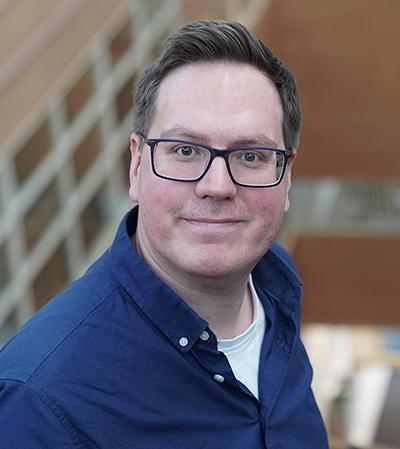
Dear, temporary academic staff at the University of Oslo.
The University of Oslo has been absolutely central throughout most of my life—through 16 years as a student and employee in various roles, but also even before that as a provider of knowledge I could always trust and look up to when I grew a little older. This relationship makes my heart beat ever more strongly for how important it is to create and care for an institution like UiO—not only by giving people an education that enables them to get a good job, but by offering knowledge that transforms both oneself and the world we live in, and that provides an entirely new understanding of how one’s view of the world can change through knowledge.
This privileged relationship that I myself have with UiO is something I wish to carry forward and share with more people, by facilitating greater access to the knowledge developed through our studies and research. It is also important for our legitimacy in the broader population, as those who work in higher education, that people have a relationship to and understand what higher education and research entail. This requires us to be outward-looking, open, welcoming, and eager to engage with society at large, rather than closing ourselves off too much inwardly.
What are your most important issues, briefly stated?
Career Policy
Those of us who are temporary academic staff know that we are in a highly insecure and uncertain employment situation. Competition for future positions is fierce, and it is exhausting to constantly think strategically about what might improve one’s chances for continued employment and career progression. Above all, those of us at the early stages of a research career need to know—and to experience—that opportunities exist after our contracts expire.
The most important issue is, of course, to fight for the creation of more permanent research positions that we can apply for. This requires increased funding for universities and colleges, research institutes, and healthcare institutions. At the same time, there is significant untapped potential in increasing the interest and willingness of private companies and investors to invest in research and development. Private contributions must be recognized rather than viewed with suspicion, as long as we can ensure academic freedom.
Moreover, opportunities to work as researchers in companies and organizations that are not primarily research-driven could represent a new arena that provides more job opportunities and career paths in the future. It is also crucial that we receive good follow-up and mentoring, so that we are well prepared when the time comes to move into a new position.
Working Environment
Being a temporary academic staff member is demanding. Not only are you expected to produce cutting-edge research in your field within a short timeframe, but you must also navigate an unfamiliar academic system and constantly present yourself at your very best. It is important to acknowledge that even though temporary academic staff are skilled and capable individuals, we are not simply performance machines that can deliver at peak level continuously.
We must recognize—and give ourselves permission—to be whole human beings, with both strengths and weaknesses. It should be acceptable to be open about what one finds challenging and what one has not yet fully mastered, without feeling judged by others, fearing damage to one’s career, or being seen as weak. We need to cultivate an inclusive and open culture in academia, where it is acceptable not to be perfect all the time.
Perhaps it is precisely through acknowledging our own limitations that we find the motivation to improve and develop further. Making mistakes is, after all, an essential part of the learning process, and by sharing our less successful attempts, we can all gain greater confidence and reassurance that it is normal for things not to work out immediately. A more caring culture—where people feel seen and recognized as whole individuals—is vital for creating an environment in which people feel there is room for ambition, as well as the support and security needed to achieve those ambitions within a learning community.
Academic Solidarity
In an increasing number of contexts, it seems to be considered more important to project political strength by asserting falsehoods and appearing decisive, than to show uncertainty, doubt, and careful consideration of alternatives based on nuances from various knowledge sources. Higher education institutions are increasingly under attack because those in power dislike or disagree with the research being produced. When words and entire fields of research are banned, we have reached a point where people are afraid to be exposed to ideas that challenge their own beliefs.
As a university, we must help demonstrate that changing one’s mind when convinced by a better argument is not dangerous. On the contrary, a society grounded in sound decision-making—benefiting the population—depends on the confidence that issues have been thoroughly examined from multiple perspectives. Countries and societies around the world must be given opportunities to participate in academic communities, and it must become normalized to base debate and decision-making on research and knowledge. Only in this way can we together build a better world for ourselves and one another, and move toward a safer future.
This means we cannot focus solely on ourselves, but must look outward to support those who need our expertise in building their societies—and to learn from one another for our shared benefit.
Election Platform
It is my belief in the power and potential of knowledge—and in the importance of collectively elevating the respect and status of acquiring new knowledge, skills, and competencies through education and research—that motivates me strongly to run for the University Board. I wish to promote core values such as academic freedom, hospitality, and Bildung, but it is equally important to emphasize that we as academics have a responsibility to ensure that others are given the same opportunities as we have to participate in academic communities.
Therefore, it is crucial that UiO remains conscious of its responsibility not to contribute—through its partnerships or organizational practices—to depriving anyone of the right to education and research, whether internally or globally. By leading the way and demonstrating how knowledge can be shared and valued, UiO can hopefully contribute to a better future both here in Norway and internationally.
About Me
I am pursuing a PhD on communication between healthcare professionals and patients, investigating how communication can be used to improve diagnostics, treatment, and follow-up through enhanced health literacy for patients with fibrotic diseases. This work takes place within the FibroPET convergence environment as part of the Life Science initiative. I am also affiliated with the Centre for Person-Centred Care at the University of Gothenburg, where I work interdisciplinarily with rheumatology, nuclear medicine, and physics.
Through my various roles—first in student politics as chair of the Faculty of Educational Sciences student council and editor of Pedagogisk profil, numerous committees, councils, and bodies through the Student Parliament, the Welfare Council, and the National Union of Students in Norway, and later during my PhD in health education and clinical communication through roles in UiODoc (including responsibility for representation, PR, and leadership), as well as nationally as a government liaison and president of the Norwegian Association of Doctoral Candidate Organizations, and within Eurodoc as an instructor in the ambassador programme on values and democracy in research and higher education—I have come to value the opportunity to influence and contribute to change.
Through dialogue and collaboration, it often becomes easier to lay the groundwork for meaningful efforts that improve conditions for temporary academic staff. To achieve real change, it is essential to unite politics and research, ensuring that political decisions are based on solid, evidence-based arguments informed by research and development efforts.
Nominator
- Karl Henrik Storhaug Reinås, UV