Abstract
To navigate complex environments, our brains must constantly evaluate sensory uncertainty and extract structural regularities to predict upcoming events. While predictive coding posits that prediction errors are weighted by sensory precision, it remains poorly understood how spectral complexity in individual sounds interacts with sequence-level predictability across the neuronal auditory processing hierarchy. This presentation will explore an ongoing project investigating how human listeners form expectations and update internal models under varying levels of informational complexity. The study applies a local-global paradigm across three conditions that systematically manipulate acoustic regularity (harmonic vs inharmonic complex tones) and sequential predictability. By combining behavioural measures and scalp electroencephalography (EEG) which allows us to track neural markers of prediction error (MMN) and global context updating (P3 complex) - we examine how information variability modulates these neural responses.
Bio
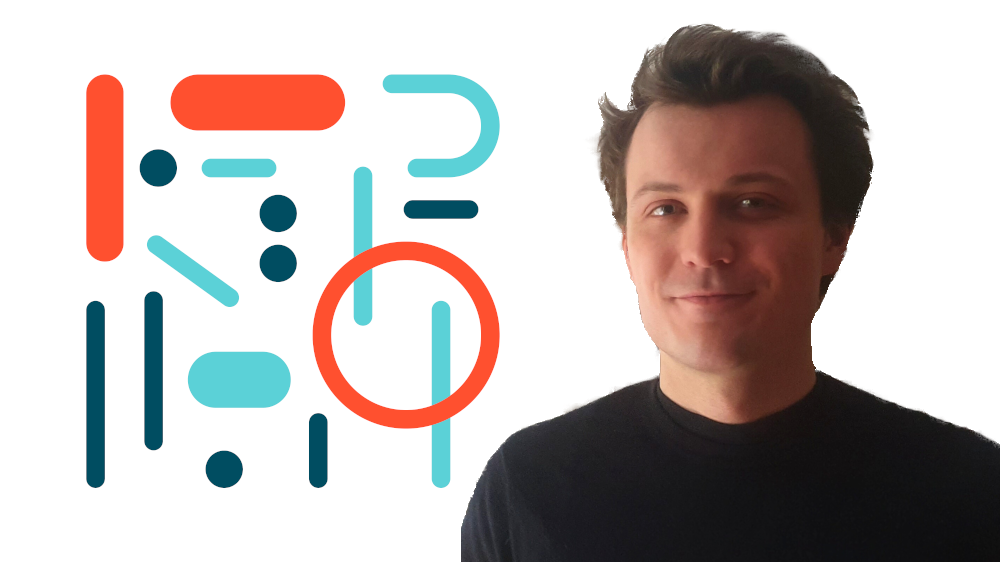
Tomasz Domżalski is a PhD researcher in Cognitive Neuroscience at Auditory Neuroscience Lab (Department of Psychology) at the Medical University of Gdańsk (MUG), Poland, where he also obtained his MSc in Psychology. Alongside his research, he teaches Python programming and Research Methods to students at MUG. Outside the lab, you can find him catching and throwing flying discs, enjoying live performances, or sitting somewhere navigating complex environments.