Origins in the Musical Gestures project
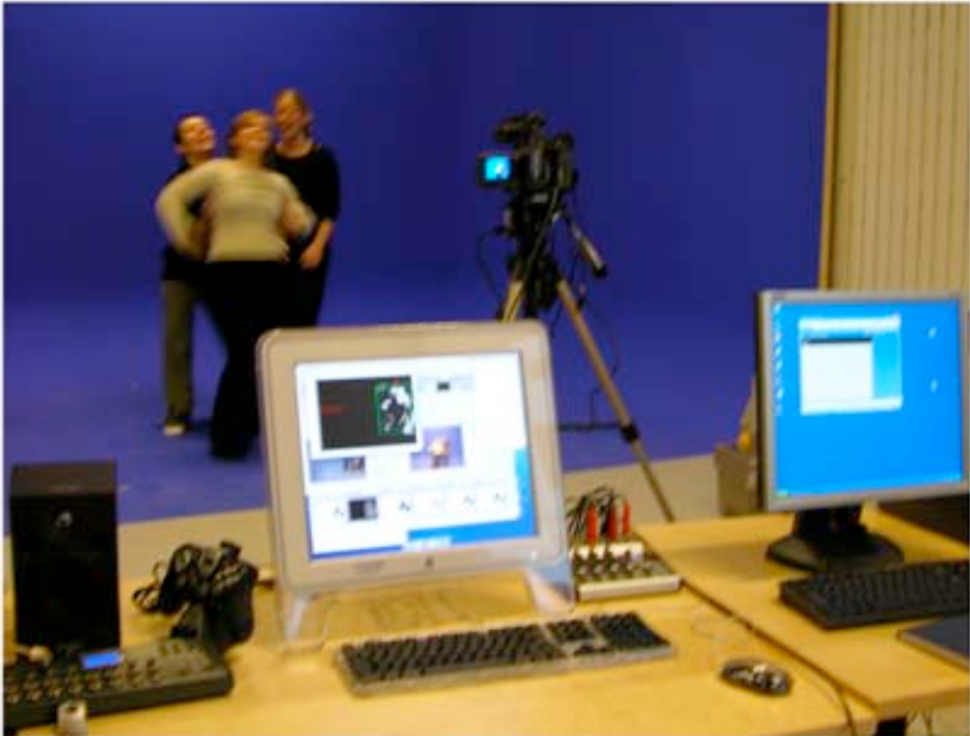
The history of the fourMs Lab can be traced back to the Musical Gestures project, led by Professor Rolf Inge Godøy at the Department of Musicology. The project explored music-related body motion in various ways and needed a setup for recording dancers and performers. The researchers borrowed the video studio of the UiO Intermedia group (now LINK) and performed the first set of recordings with a bluescreen in 2005.
The initial video recordings were the start point for many years of empirical investigations into how bodies move with and to music. The researchers also developed several different software solutions for extracting information about music-related body motion, tools that would be refined and reused across the projects that followed.
The work was outward-looking from the very beginning. Through 2005 and 2006 the group ran joint Musical Gestures workshops together with McGill University, took part in a music-technology summer camp, and presented the research to a wider public at the University’s annual Research Days, including a stand on “Musical Gestures in the concert hall”.
A first dedicated lab (2006)
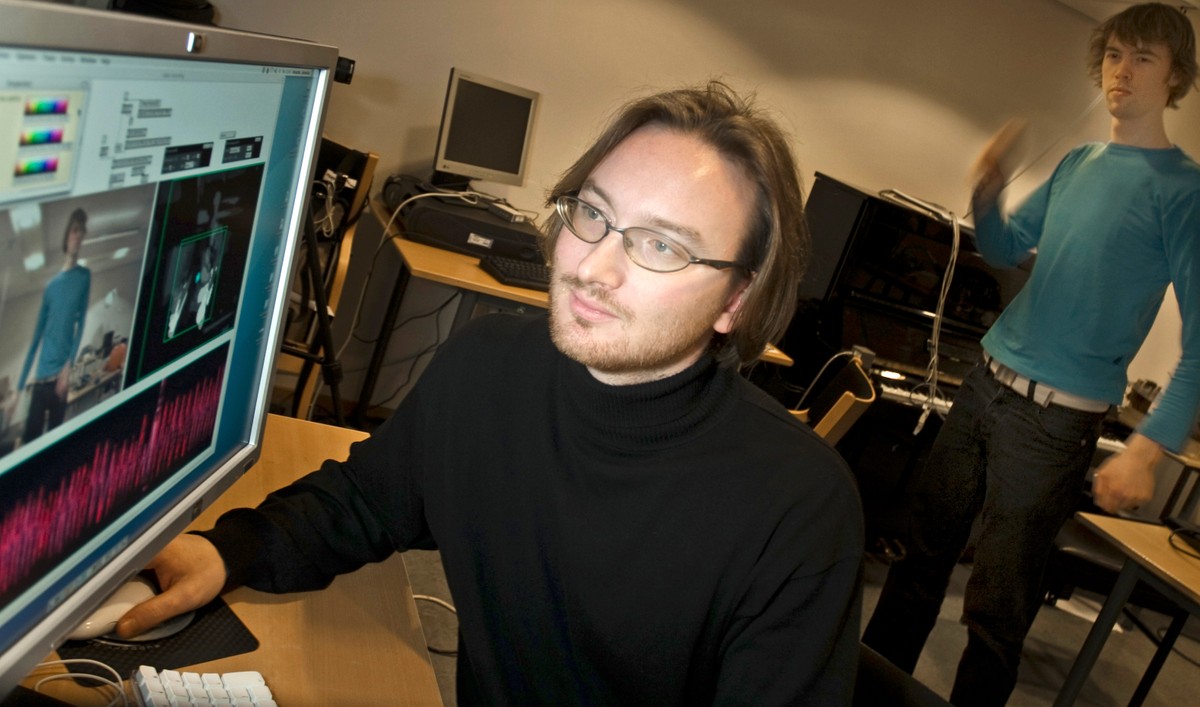
In need of a better motion tracking solution, an electromagnetic tracker from Polhemus was purchased and set up in a small room in the basement of the Department of Musicology in 2006. This first dedicated lab, in the ZEB building, was where Alexander Refsum Jensenius and Kristian Nymoen worked. The Polhemus system was used in studies of pianists’ motion, and particularly the effect of coarticulation in music performance. This lab was also where the first sound-tracing studies were carried out.
Throughout these early years the group engaged closely with the wider European research community. The researchers took part in COST Actions such as ConGAS, on gesture-controlled audio systems, and Sonic Interaction Design, connecting the lab’s work to an international network of music-technology and interaction research and helping to shape how gesture, sound, and interaction were studied across Europe.
Naming the lab: Music, Mind, Motion, Machines (2008)
The project Sensing Music-related Actions started up in 2008, as a collaboration between researchers from the Department of Musicology and the Department of Informatics.
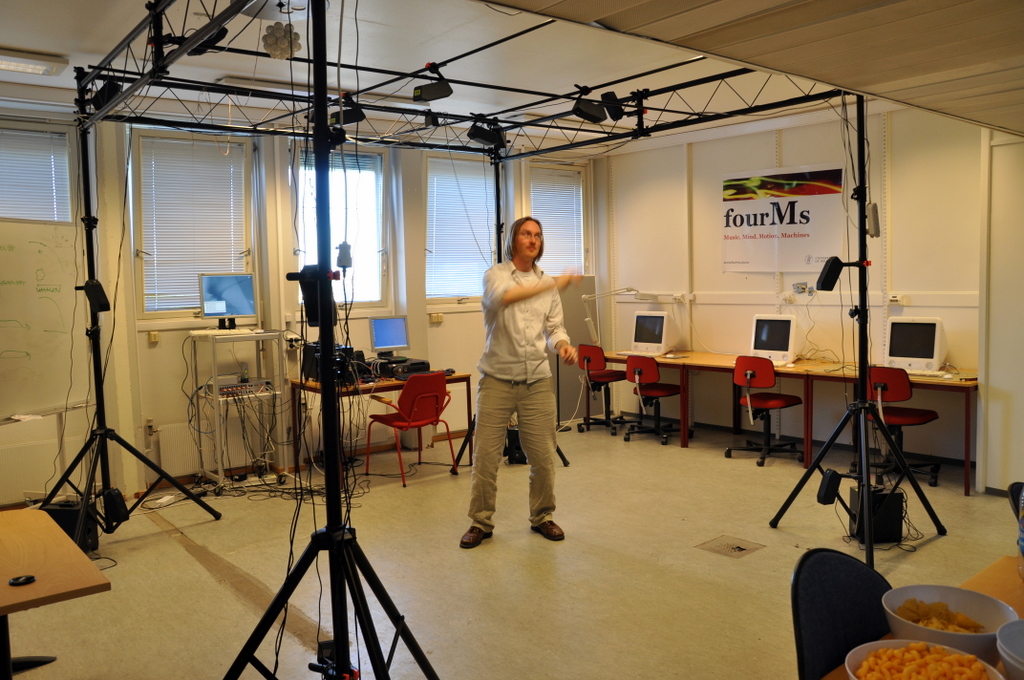
With more researchers, the need for a larger lab space became apparent. The lab was moved to a larger space on the north side of the Blindern campus called Veglaben (a building that has since been torn down to give space to the new UiO:Life Science building).
The updated lab needed a name, and fourMs was suggested by Rolf Inge Godøy. The aim was to explain that the group’s focus was on the intersection of the four M’s in “Music, Mind, Motion, Machines”.
The first marker-based motion capture system was purchased from Optitrack, and the researchers also worked with various types of custom-built electronics. Funding was secured for purchasing a state-of-the-art motion capture system from Qualisys, which was installed in 2009. This gave the lab high-precision, optical, infrared marker-based tracking, and follow-up sound-tracing experiments in 2009 and 2010 made direct use of the new system to capture how people move in response to sound.
The black box at ZEB (2011)
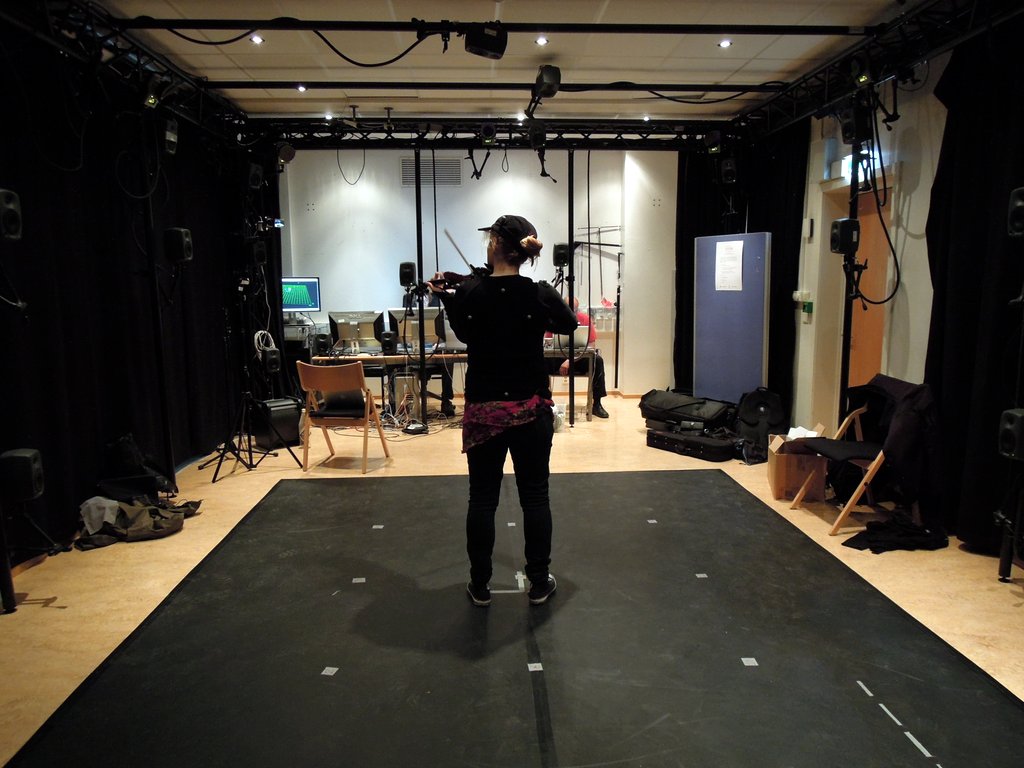
The lab moved back to the ZEB building in 2011. A former seminar room on the ground floor was turned into a “black box”, and a multichannel audio rig was installed together with the motion capture system. The researchers from the Department of Informatics moved to the new informatics building, but collaboration continued.
Through these years the lab became a hub for research, teaching, and performance. It hosted concerts and public performances and contributed to international conferences, among them NIME in 2011 and FPL in 2012. Later it ran the Electric Space concert series in 2015 and 2016, exploring the meeting of electronic sound and live movement, alongside a regular internal research forum that kept the growing group in conversation. Doctoral work matured into a series of PhD defences held from the lab, among them those of Kristian Nymoen in 2013 and Ståle Skogstad in 2014. The lab’s methods also reached beyond music: through the CIMA project, fourMs researchers helped develop a computer-based video analysis tool for assessing infant movement, building directly on the Musical Gestures and Sensing Music-related Actions projects.
An application for a Norwegian Centre of Excellence was submitted under the name fourMs, and received top grades in the evaluation, but was eventually not funded. Still, “runner up” funding secured continued research activities in the lab.
Into RITMO and Harald Schjelderups hus
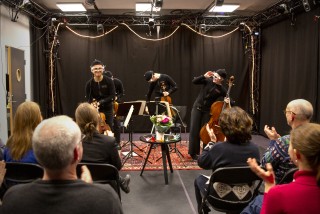
The collaboration in the lab expanded to include also researchers from the Department of Psychology. A new application for a Centre of Excellence between the Departments of Musicology, Psychology, and Informatics was submitted in 2016. The application was successful, and RITMO Centre for Interdisciplinary Studies in Rhythm, Time and Motion was established in 2017. It was decided that RITMO should move into Harald Schjelderups hus on the northwest side of the Blindern campus.
The fourMs Lab moved into a new custom-built facility in August 2018. The old lab space in the ZEB building was converted into the MCT Portal for the new master’s programme Music, Communication & Technology.
The lab today
Today the fourMs Lab is a world-class research infrastructure for studies of human body movement and physiology in an immersive multimedia environment. It is a national research infrastructure that is available to rent by external users, who are welcome to get in touch to discuss availability and costs. The lab is housed in Harald Schjelderups hus, entrance 1, on the northwest side of the Blindern campus, as part of RITMO. It is led by lab director Alexander Refsum Jensenius, with Laura Bishop as deputy director and Kayla Burnim as lab engineer.
Explore the archive
The story above is only an outline. For a year-by-year record of the concerts, conferences, guest lectures, disputations, and news that have shaped the lab, browse the events archive.