2026
Ongoing

Antimicrobial resistance is one of the greatest health challenges of our time. Join leading international experts in Oslo to explore how research, policy, innovation and global collaboration can help.
Upcoming
Institutions of higher education are under attack in countries worldwide. What are the democratic consequences of attacks on schools, universities and academic freedom?
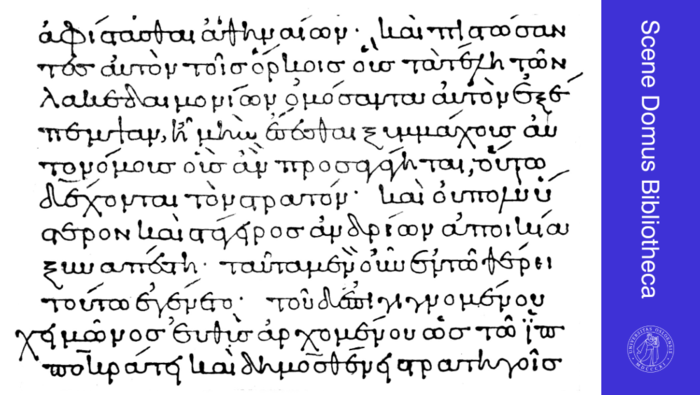
The Greek language has a 3000 year long history. Get to know the people who spoke and wrote Greek in Antiquity, the Middle Ages and today through concrete examples.

Welcome to the Sámi Law Symposium 2026!

We celebrate the 25th anniversary of Scholars at Risk with a seminar asking: How can scholarship promote peace?
Previous
In this talk, Professor Ashley Thompson, SOAS University of London, will examine the case of the 11th century Khmer bronze portrait of Shiva to probe the realities of restitution in Southeast Asia.

Open lectures by this year's winners of the Anders Jahre's Awards for Medical Research, Ole Kiehn, Heidi Haikala, and Chloé B. Steen.

This report launch event addresses human rights, climate and environment under the EU Corporate Sustainability Due Diligence Directive (CSDDD) and the Norwegian Transparency Act.
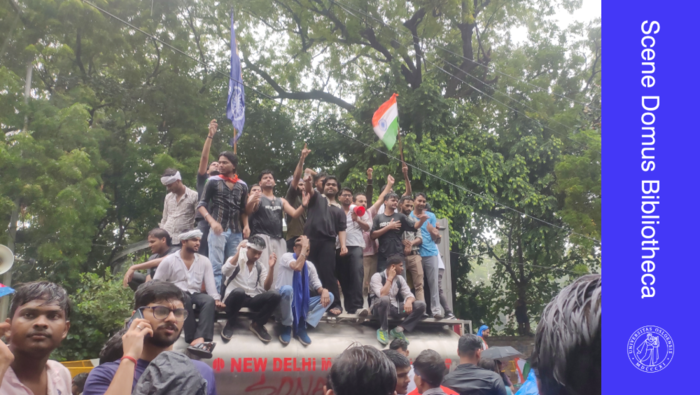
Is the recent wave of youth-led protests the beginning of the end of the Modi era?

Join us as we will explore what these devices can actually see, hear and understand — and what this means for privacy, consent and the people around us.

The 2026 GEM Report takes stock of education progress in access and equity. How can we understand and use the findings and recommendations globally and nationally?

Welcome to an inspiring Nordic Quantum Afternoon with the Nordic Embassies in Oslo, Nordic Innovation and the University of Oslo!

How can the European market be more integrated, competitive and resilient? Welcome to the ARENA Lecture with Enrico Letta, former Prime Minister of Italy.

Global power shifts, shrinking aid and contested rules are reshaping development. Whose priorities count, who gets to act, and who must answer for the consequences?

Ukraine is facing a mental health crisis of a scale Europe has not seen in decades.

China’s global engagement beyond the headlines: three scholars explore geopolitics, transforming cooperation, and on-the-ground dynamics across world regions.

Who shapes our attention? How does it affect both personal agency and democracy? Leading scholars and practitioners discuss technology, power, and how we can regain control over our attentional lives.

Prof. Hilde Henriksen Waage on The ‘True Story’ - Norway and the Oslo Peace Process in the Middle East

How do shifting global power dynamics affect human rights norms and institutions, and what role can development assistance and key stakeholders play in a changed geopolitical climate?

Seventy-five years after its adoption, the 1951 Refugee Convention remains the main global agreement for protecting refugees. Yet for many displaced people, its promises still do not match their experiences at borders, at sea, or in asylum systems.

Survivor testimony and the limits of international criminal justice: Wartime sexual violence in Kosovo and beyond

The memory culture surrounding the Holocaust has become a reference point in efforts to combat racism, human rights violations, and mass violence. With the war in Gaza, Holocaust memory has increasingly been drawn into contemporary politics. We ask how this affects the field’s credibility and broad public support.

Men die early to a much greater extent than women. How can this excess mortality be prevented?

Artificial intelligence increasingly depends on large-scale computational resources, data flows, cloud services, and secure networking. At the same time, countries and regions are exploring how to maintain strategic autonomy over critical digital infrastructure in a rapidly changing technological landscape.

What meaning does the entanglement of the Holocaust and the Nakba gain in the shadow of October 7th and the war on Gaza?