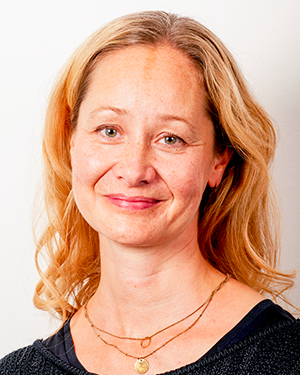
– Which research project are you working on the most at the moment?
– I should begin by saying that my field is environmental psychology. It examines the relationship between people and physical surroundings – the significance of architecture and nature, and how we can encourage people to do more for the climate and the environment. These days, most of my contribution to research in this area is through the supervision of PhD candidates. I supervise candidates who, for example, study the importance of healthcare architecture, architects’ understanding of research-based design, experts’ battery discourses, and the role of professional networks in learning about reuse of building materials.
– I mainly work with qualitative methods, and I am employed at PSI to teach qualitative methods. That is why I am particularly pleased to have a new research project that allows my colleagues and me to delve deeply into methodological challenges; ReDemOS. It focuses on Open science, which is, in principle, a brilliant idea that can help democratise and open up knowledge production. However, the way Open science is currently practised – perhaps especially in psychology – with its main emphasis on preregistration of projects and open data, is best suited to natural-science-based and hypothesis-testing research. We risk that this may have some unintended, undemocratic consequences for certain types of research, such as qualitative research.
– What do you hope to find out?
– We are curious about how researchers in different disciplines perceive and relate to Open science, particularly in fields with strong qualitative research traditions. We are also interested in how expectations surrounding Open science are communicated by research funders and journals. How do Open science practices shape knowledge production? In addition, we want to broaden and innovate the understanding of which research practices are recognised as Open science. We use surveys, document analyses and interviews to collect data on all of this.
– Why is this important?
– Interpretive qualitative research can provide critical perspectives, deeper insights and important nuances that are central to the development of knowledge and research fields. We risk that Open science requirements are imposed that do not fit qualitative methods, and thus lead to qualitative research becoming poorer in quality or marginalised. We will particularly examine how this affects qualitative research on vulnerable groups, where data often consist of sensitive life stories. Expectations of open data, for example, may create a risk of breaching ethical guidelines. It may also mean that researchers avoid sensitive topics in order to be able to share data openly, and thus be able to publish. Or that participants hold back in interviews because they fear their stories will be shared in ways that have not been agreed. I am very keen to learn what experiences other qualitative researchers have with this and other Open science practices.
– We are also concerned that there are many ways of opening up one’s research that currently do not have the status of “Open science”, but could be recognised as such – for instance, the researcher’s own reflection on their position in relation to what they are studying. Involving participants as a way of opening up research has likewise received little attention as an Open science practice. Forms of openness that are not easily counted and measured tend to be given little weight.
– Who are you collaborating with?
– In ReDemOS I am working with methodological colleagues at PSI – Guro Brokke Omland, Sigrun Marie Moss and our new PhD candidate Miriam Natvig – and with colleagues from other disciplines: Anette Bringedal Houge from Criminology, Luca Tateo from Special Needs Education, and Agata Bochynska from the University Library. We have brought together a broad international reference group, including people whose work we find particularly interesting on how Open science intersects with qualitative research. It has also been important for us to include researchers with a quantitative background, who can look at what we write from a different perspective.
– What do you look for when you choose collaborators?
– I look for people with similar research interests, who write things I find interesting or who make me see things in new ways. In practice, you tend to return to colleagues you get on well with – those who contribute and keep their promises. The most important thing is that the people you work with are decent human beings. I am also used to working across disciplines, from several years on Research Council of Norway projects at SINTEF, and I really value working with people from different academic backgrounds.
– Who is your research relevant for outside academia, and what do you do to ensure they benefit from it?
– Research on method from a meta-perspective, as in ReDemOS, is probably not something most people are particularly interested in. It is especially relevant for those working in research administration with funding, publishing and recruitment. We have invited, and will continue to invite, contacts from research administration to seminars in ReDemOS. Once we begin to have more results, I also think it will be important to publish some of the work in Norwegian.
– Do you have any examples of your research being used outside academia?
– ReDemOS is a project about academia and the bureaucratic instruments that steer knowledge production, so we want the forthcoming results to have consequences for research funding and publishing specifically within academia. We hope to clarify the need for tailored ways of opening up research, which can be adapted to different forms of knowledge production. I myself am co-editor of an environmental psychology journal, Global Environmental Psychology, which has had a strong focus on Open science, including expectations of preregistration and open data for submitted articles. In the most recent editorial, I have been keen to emphasise that Open science requirements must be adapted to different epistemologies and knowledge aims, in order not to exclude, among other things, qualitative research. That is a concrete outcome of my own journey of learning in this field.
– What other research projects are you involved in?
– As I mentioned, I have long been interested in research on healthcare buildings – how we can help ensure that the surroundings support recovery rather than hinder it. We are studying a case called Friluftssykehuset, a cabin at Oslo University Hospital that staff can book for treatment sessions and conversations with patients, and which patients can use in the afternoons and evenings. We are finding many examples of how natural surroundings make children in hospital feel safer, how therapists find it easier to connect with the children and experience more flow in the therapy. I am fascinated by the idea that the physical environment can contribute to this.
– What do you find most interesting about being a researcher?
– I have always enjoyed writing, and I am probably more concerned than most that written contributions should offer a good reading experience. In qualitative research, there is somewhat greater freedom to use aesthetic and linguistic devices to convey knowledge. My aim is that what we write should have the potential to move people.
– I really like creating projects and articles together with others. I also think that one of the most important things I can do as a professor is to create opportunities for others – for students and PhD candidates. That is why I thrive in the role of supervisor.