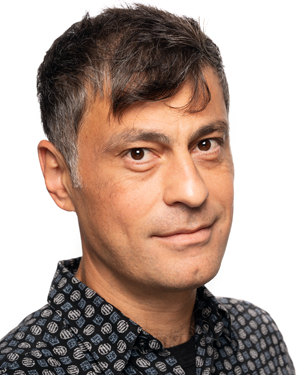
– Which teaching program would you like to highlight for your colleagues at the faculty right now?
– I’d like to highlight the Master’s programme in Social Anthropology at SAI, UiO. I honestly believe it must be one of the most fascinating Social Anthropology Master programmes in Europe.
– What I find particularly valuable is the programme’s strong emphasis on ethnographic thinking and independent fieldwork, that can last many months, combined with close academic supervision. It gives students the opportunity to engage deeply with anthropological theory while developing their own research interests and perspectives. Students write a 100-odd page thesis, the product of unique ethnographic research and original thinking, that attests to their capacity as writers and researchers. I think the MA’s combination of theoretical depth, empirical research, and close student–teacher interaction is something worth highlighting with colleagues at the faculty.
– Who do you collaborate with?
– I collaborate with many colleagues in teaching, for example sharing seminar groups with PhDs and post-docs, or co-teaching with other professors, in courses like Economic Anthropology, or Anthropology of Development. It has always been a productive endeavour. I have particularly enjoyed working with fellow economic anthropologist Marie Nilsson who is about to submit her PhD thesis under my supervision.
– This semester my colleague Axel Rudi teaches a course I designed for the MA, and does a great job with it; we have productively worked together sharing resources on it. We have a Head of Education at the department, and both the previous one, Christian Krohn-Hansen and the current one, Ingjerd Hoem, have been greatly collaborative with us teachers.
– I used to be the MA programme director for just over 3 years before my colleague Kenneth Bo Nielsen took over more than a year ago and during that time our collaboration with Christian was fantastic.
– In your opinion, what are the three most important factors for achieving good teaching in this field?
– I would say that three factors are particularly important for achieving good teaching in anthropology, and indeed especially in economic anthropology.
– First, connecting theory to ethnographic realities. Students understand anthropological concepts much more deeply when they can see how ideas about markets, labour, exchange, value, money, inequality, or livelihoods play out in people’s everyday lives. As Marx reminded the German audience in the preface to Das Kapital, it is not about England he was talking about; England was the indicative case. In fact, de te fabula narrator, i.e. the fable talks about you! The teacher must remind students that ethnographic work speaks to their lives and our common experiences
– Second, encouraging critical and comparative thinking. Again, it is about relevance. Economic and political anthropology are especially well suited to challenging taken-for-granted assumptions about what an economy is and how economic life works. As my friend and mentor, the late Keith Hart said at one point, the point in the hau of the gift is not about the Maori, it is about understanding the economy! Teaching should encourage students to compare different social and cultural contexts and to question categories that may seem universal.
– Third, creating an active and inclusive learning environment. Students should have opportunities to discuss ethnographic cases, engage with each other’s interpretations, and relate anthropological perspectives to contemporary economic issues. I think good teaching in anthropology is not simply about transmitting knowledge; it is about helping students develop the ability to observe, question, interpret, and think ethnographically.
– If you were to give one piece of advice to new teachers at the faculty, what would it be?
– I think we should take our students seriously, and never underestimate them. Even when they appear seemingly detached, there are things that can draw their attention. We should give them demanding ideas and the space to wrestle with them, but also expand on their need to come up against a reality that is settled against the majority of them.
– When I teach Economic Anthropology, I make sure that students fully understand the capitalist predicament in which their lives are enmeshed. Our job is not simply to transmit what we know, but to create the conditions in which students can develop their own questions, arguments, and intellectual confidence.