Tidligere arrangementer - Side 4
By Gabriel Blouin-Demers from the Université d’Ottawa, Canada

Multilingual families navigate multiple languages, and their multilingual lives are shaped by space, history, and identity.
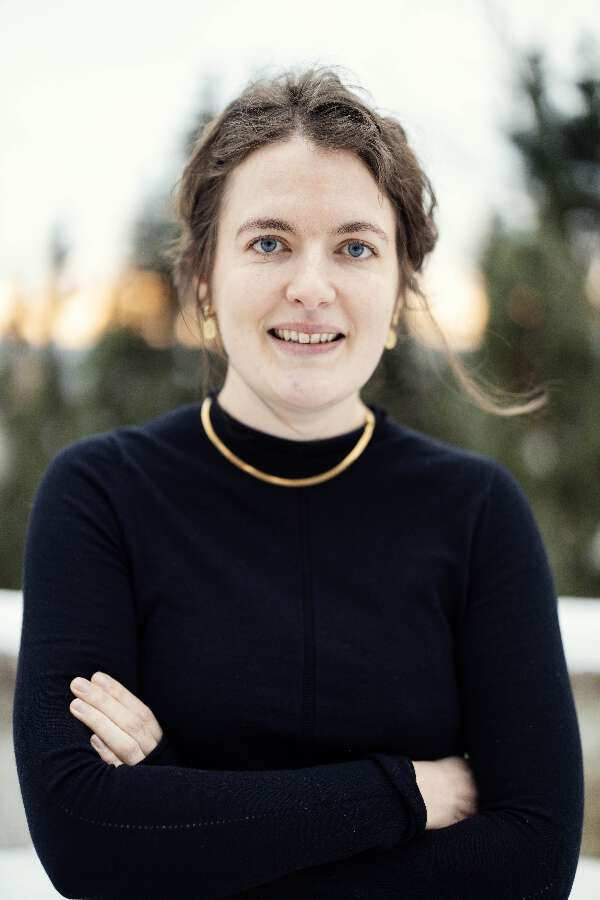
Céline Cunen is a researcher at the Oslo Centre for Biostatistics and Epidemiology (OCBE) at the Oslo University Hospital. There she works on a variety of topics within methodological and applied statistics, including clinical trials. She also holds a part-time position at Peace Research Institute Oslo (PRIO) where she does research on the evaluation of conflict forecasts. She received her PhD in statistics from the University of Oslo in 2018.
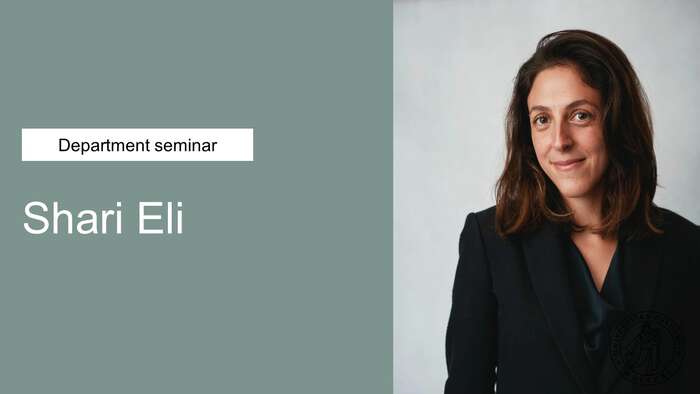
Department seminar. Shari Eli is a Professor in the Economics Department at the University of Toronto. She will present the paper: "Long Run Impact of Cash Transfers to Poor Children: New Estimates Using Larger Samples"

A discussion of Hiromi Ito's literary work.

Distinguished Professor at the Graduate Center, CUNY, Kofi Agawu, will speak at RITMO's Seminar Series.
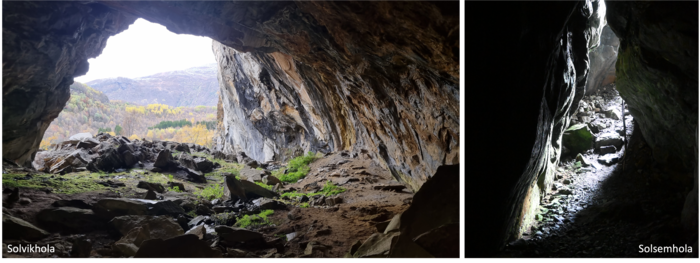
Archaeological Friday Seminar with Lea Frank, CEES - Centre for Ecological and Evolutionary Synthesis (UiO).
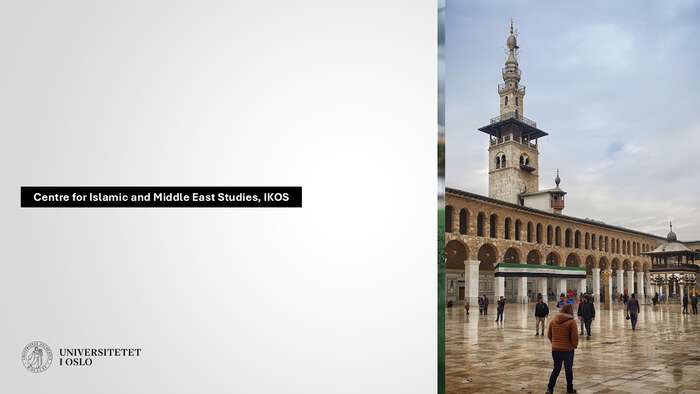
We are pleased to host Senior Researcher Thomas Pierret who will speak about “Religious policies in the New Syria”
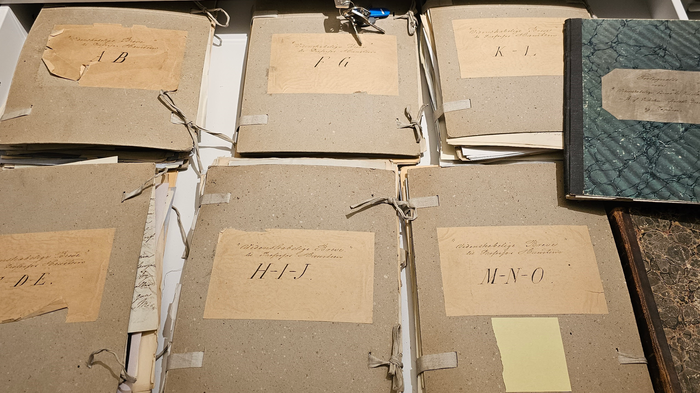
Bli med oss og hør på Line Nybakk Akerholt, fagbibliotekar for ITA ved Universitetsbiblioteket — seksjonen for åpen forskning og spesialsamlinger!

Lecture by Professor Heleen de Coninck, Department of Industrial Engineering and Innovation Sciences, Eindhoven University of Technology.

The Philosophical Seminar With Ram Neta
A primitive element of a Galois field F is a generator of the group of units F*. Finding such elements is entirely non-trivial and this search has given rise to many interesting results in number theory. If one is willing to assume the generalised Riemann hypothesis, then every (non-silly) integer is primitive to infinitely many prime order fields. Moreover, the least primitive element in such fields is less than the square root of the order. I will present an effective method for finding primitive elements in Galois fields with prime-power order. This method is an amalgamation of my hybrid bound on prime divisors and joint work with J. Punch on prime sieves. I will also discuss some of my recent work on least primitive elements.

QOMBINE seminar by Markus Grassl (International Centre for Theory of Quantum Technologies, University Gdansk)
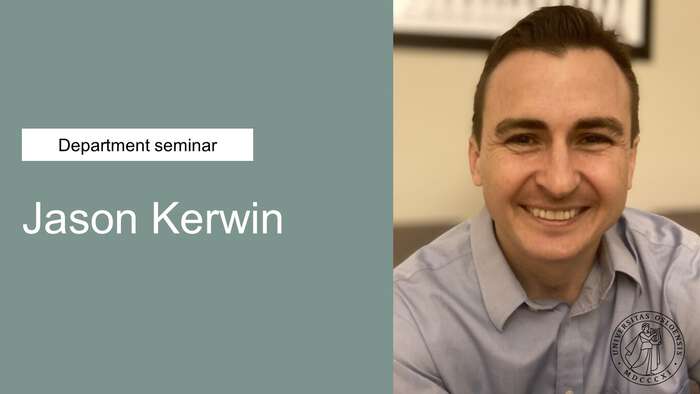
Department seminar. Jason Kerwin is an Associate Professor in the Department of Economics and a Brimmer Distinguished Scholar at the University of Washington. He will present the paper: How to Build a Reader: Evidence from a Scalable Literacy Intervention in Ghana

In this talk, Elin McCready (ICREA/UAB) presents a novel approach to the meaning of slurs in three parts: a descriptive predication, an indexical social meaning, and an invocational component, which together account for a broad range of facts about slur meanings.

The Departmental Seminar Series features Frida Hastrup, Director of the Centre for Sustainable Futures at the Saxo Institute, University of Copenhagen.

Brad Jordan (IFIKK, UiO)
PDE seminar by Konstantina Trivisa (University of Maryland)
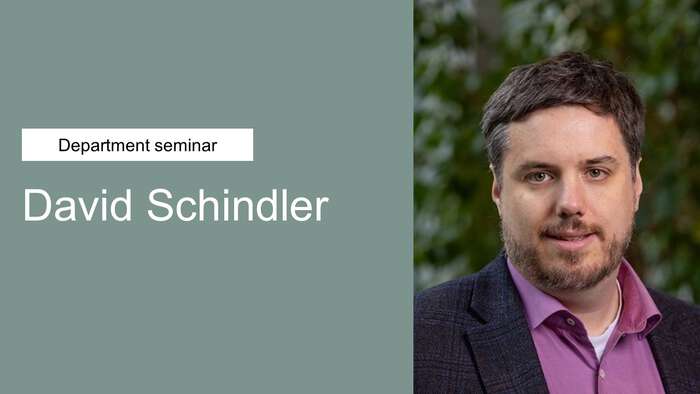
Department seminar. David Schindler is an Associate Professor in the Economics department at Tilburg University. He will present the paper "Contagious Prejudice: The Marocchinate".

A talk by Seongjin Jeong, Distinguished Research Professor in the Department of Economics at Gyeongsang National University.
Jan Skotheim is Professor of Biology at Stanford University and Professor, by courtesy, of Chemical and Systems Biology. His research focuses on understanding how cells grow and how cell growth triggers cell division, a fundamental process with important implications for normal physiology and diseases such as cancer.
Skotheim leads an interdisciplinary research program that combines mathematics, physics, engineering, biochemistry, genetics, and cell and systems biology. His laboratory primarily studies cell-size control and the cell cycle using budding yeast as a model organism, with the goal of uncovering the molecular mechanisms that connect cellular growth to division.
He did his PhD in Applied Mathematics from the University of Cambridge in 2004. He subsequently conducted postdoctoral research in genetics, cell biology, and systems biology at The Rockefeller University before joining Stanford’s faculty.

José Ricardo Correia, Institute of Theoretical Astrophysics, University of Oslo.