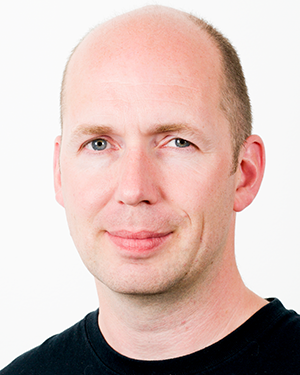
– Which teaching program would you like to highlight for your colleagues at the faculty right now?
– I would like to highlight a course that will run for the first time in autumn 2026 on literature reviews and research communication, SOSGEO4031. You do a literature review every time you write something, of course, but this course goes quite a bit further by covering several types, such as systematic reviews, scoping reviews and narrative reviews.
– These are central procedures for evidence-informed decision-making, whether it involves evaluations, guidelines, expert advice or other outputs, and they need to be both thorough and properly documented. You simply cannot engage in “cherry-picking” studies that support your own view. In this course, we will cover traditional search methods, but we will expand this with a range of techniques for exploiting artificial intelligence to make the screening of publications significantly more efficient and to quickly identify the relevant details. The course is very practical, so most of it will consist of conducting a review on a self-chosen topic, but following certain specifications and documentation requirements. Students will primarily be assessed on their method, and the actual exam will be an oral presentation with comments from other students.
– I think this will be a genuinely useful course for the students. We, the teachers, will also have to figure out a lot along the way, and everything related to AI is changing continuously, but I think it will be great fun, quite simply.
– Who do you collaborate with?
– On this course I am collaborating with my good colleague Lars Erik Kjekshus, who is also interested in how to use artificial intelligence in a sensible way. We have had many good discussions about approaches and the choices we are making here. We have, of course, also received input from other colleagues.
– In your opinion, what are the three most important factors for achieving good teaching in this field?
– What is crucial for students’ learning is that they work actively and that they feel the strain in their cerebral cortex. It is like going to the gym: you have to lift weights that are heavy enough to have an effect. This is particularly important when we are using artificial intelligence actively in teaching: it should not be a cognitive relief, but rather a genuine efficiency gain that still leaves plenty of time for intellectual challenges.
– The second factor is good planning and structure in the teaching. Clear learning objectives that focus the teaching, the students’ attention and assessment form are, I believe, a great help to everyone.
– The third is classroom presence – giving plenty of space for questions and discussion. Lectures should ideally be designed so that students discover what they do not understand quite as well as they thought. I am very fond of using practical exercises and demonstrations in plenary.
– If you were to give one piece of advice to new teachers at the faculty, what would it be?
– My one piece of advice would be to find a mode of teaching that you are comfortable with. Draw inspiration from and learn from others’ designs, but there is quite a lot of excellent teaching that is highly person-dependent. So reusing others’ material is very good, but you have to adapt it so that it works for you.