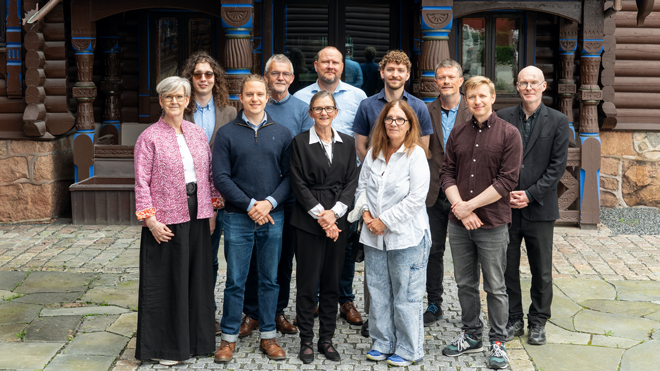
Review of the Department of Social Anthropology
The Department of Social Anthropology has for some time been in a challenging financial situation. The Faculty Board therefore requested in December 2025 a review of the department’s financial, academic-strategic and organisational room for manoeuvre. A broadly composed working group led by Professor and Faculty Board member Jostein Askim submitted its report in June. Both the working group and the Faculty Board take as a given that anthropology should continue to be an important field of teaching and research at the Faculty of Social Sciences, but point out that there are different organisational models for ensuring a financially sustainable and academically robust social anthropology environment over time.
The report was presented for information at the Faculty Board meeting on 18 June and has since been circulated for consultation. By the end of the consultation period, six consultation responses had been received. The Faculty Board considered the report and the consultation input as a matter for discussion. The Faculty leadership specifically asked for input on the following points:
- Understanding of the problem: Is the picture of the challenges sufficiently clear, and are the two models described in the report the most relevant responses to these challenges?
- Academic sustainability: What should be the academically sustainable size of a social anthropology environment at the Faculty of Social Sciences, and what knowledge base should underpin such an assessment?
- Financial risk: What level of financial risk is the faculty prepared to accept in order to maintain the Department of Social Anthropology (SAI) as an independent department, and how should this risk be managed and followed up?
- Organisational gain: If a merger is considered, what specific academic, financial and organisational benefits are expected – and what costs and risks would accompany such a change? What questions should be examined further before the faculty eventually decides on a more permanent organisational change?
- Lessons for the faculty: What lessons does this case provide for the faculty’s long-term staffing strategy, financial management, risk assessments and follow-up of the basic units?
The Dean also asked the Faculty Board to provide input on how the follow-up of the report should be taken forward.
In the discussion, the Faculty Board made it clear that we must recognise a new and tighter financial reality, and that we must use the resources we have in a smart and efficient way. They therefore considered it necessary to investigate the opportunities, risks and disadvantages associated with a possible merger option.
The way forward
The Faculty leadership was asked to present a proposed mandate for a working group that will carry out this review. The proposed mandate will be presented to the Faculty Board in December. Before then, a draft mandate will be discussed in various forums within the organisation.
The Faculty Board emphasised the importance of involving staff at the Department of Social Anthropology appropriately in the review. Their input will be crucial both for identifying risks associated with any organisational change, and for identifying the academic opportunities that such a change might offer. The plan for communication and involvement will be updated in the week following the autumn break.
Annual plan 2027–2029
At the meeting, the Faculty Board was presented with a draft annual plan for 2027 to 2029. The draft has previously been discussed at the Heads of Department meeting, where input was given that the new annual plan should have fewer and clearer priority objectives and measures.
The Faculty Board gave clear feedback that the work on artificial intelligence (AI) and its impact on education and research was insufficiently highlighted in the draft. The Board wants AI to be a topic at an upcoming board seminar and would like an assessment of whether parts of the board’s strategic funds should be allocated to strengthening work on AI.
– The faculty’s annual plan must reflect the times we live in, was the clear message.
Withdrawal from the Honours Programme
The faculty joined the interdisciplinary Honours Programme in 2021. The social sciences track had, as of June, 18 study places, divided between specialisations in psychology, political science, anthropology and sociology.
The departments involved in the collaboration have reported that the Honours Programme is administratively resource-intensive and largely depends on extra effort from dedicated enthusiasts. The faculty already recruits many students with high upper secondary grades, and a considerable number of students pursue two bachelor’s degrees. It is therefore unclear whether the aim of the Honours Programme – to attract particularly motivated and ambitious students – is relevant for the faculty.
The matter has been discussed with programme coordinators, directors of studies and heads of department at the units that have contributed to the programme. The Faculty Board was informed that the faculty has decided to withdraw from the Honours Programme following input from the academic environments.
All students already admitted to the social sciences track of the Honours Programme will be able to complete their degree without changes.
A full agenda for the meeting, including case documents, is available in Norwegian here.