After a decade of green and digital ambitions – interrupted by a pandemic, wars, an energy crisis and the arrival of AI – where does Norway’s green shift actually stand? On 12 November, INTRANSIT invites researchers, industry, policymakers and civil society to Professorboligen in Oslo to take stock.
News
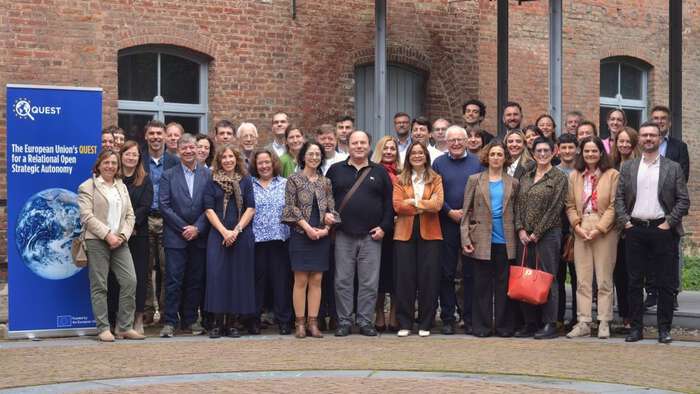
The project studies changes to European security policy and the EU’s ambition to become strategically autonomous.
Your profile page is your digital business card and an important channel for showcasing your academic and professional expertise. Now is a good time to check that the information on your profile is current and accurate.
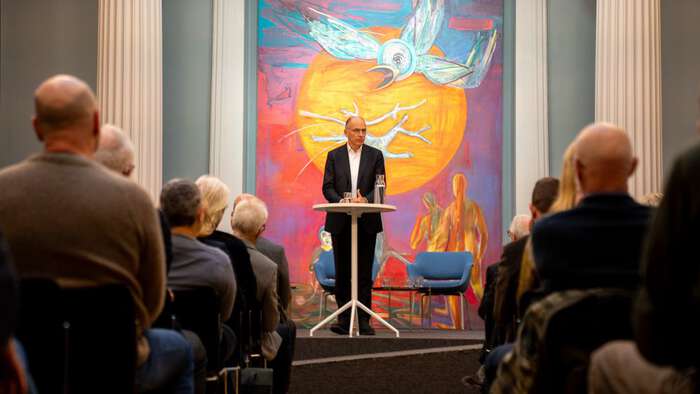
Enrico Letta, former Prime Minister of Italy, held this year's ARENA Lecture. Watch the recording here.
The annual Psychological Institute's Research Communication Award is given to one of our researchers to recognize and celebrate their significant contribution to public debate.
The Institute of Psychology (PSI) has established this award to recognize and reward an individual who has made a significant contribution to community building at PSI.
The Department of Psychology's Article Award is presented annually to a doctoral candidate in our PhD program. The award aims to highlight and reward a scientific work of exceptionally high quality.
The Department of Psychology is announcing the 2026 Open Science Award, and we need your nominations!
At the Faculty Board meeting on 24 September, the new annual plan for the faculty, follow-up of the report from the working group on the Department of Social Anthropology’s financial, academic-strategic and organisational room for manoeuvre, and the Honours Programme were among the items to be considered.
But he also warned against relying too heavily on the new technology.
“There is a clear thread running from yesterday’s forced sterilisation to today’s self-optimisation,” says Professor Jan Grue. With NOK 12 million in funding from the Research Council of Norway, he and his fellow researchers will examine old and new ideas about which people are considered to have a right to exist — and which are seen as less valuable.
When Starting Grant funding was allocated by the European Research Council, it was announced that Rosa Cheesman at the Department of Psychology was among the recipients.
The Centre for Lifespan Changes in Brain and Cognition (LCBC) has been awarded 1.28 million euro by the EU to coordinate a major European research project that will investigate the relationship between pollution, brain health and brain disorders.
The need for psychosocial support is considerable in areas affected by war and conflict. At the same time, access to professionally qualified personnel and systematic training is limited. A new course at the Department of Psychology is specifically tailored to refugees and internally displaced people.
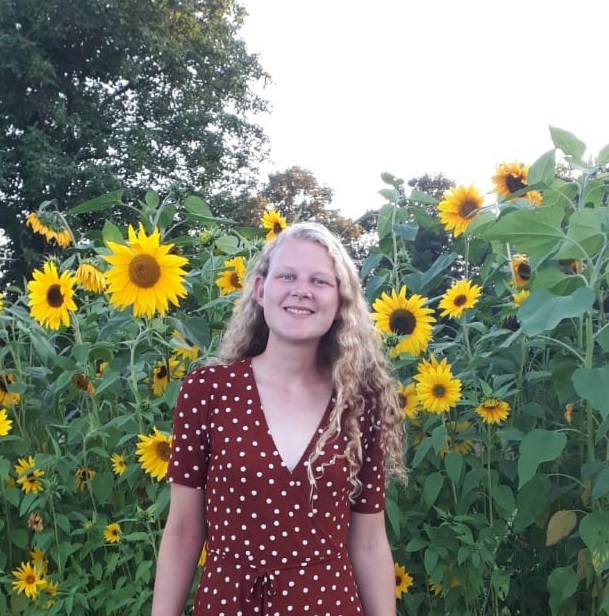
Transitions, whether driven by new technologies or by normative goals like sustainability, are inherently political. Which solutions to prefer, how to regulate new technologies, which challenges to prioritize, and which problems to ignore? These are core political questions at the heart of transformation. And they raise another one: Who stakes the overall direction of change – and how do they go about doing it? These are the questions Sabine de Graaff explores in her PhD.
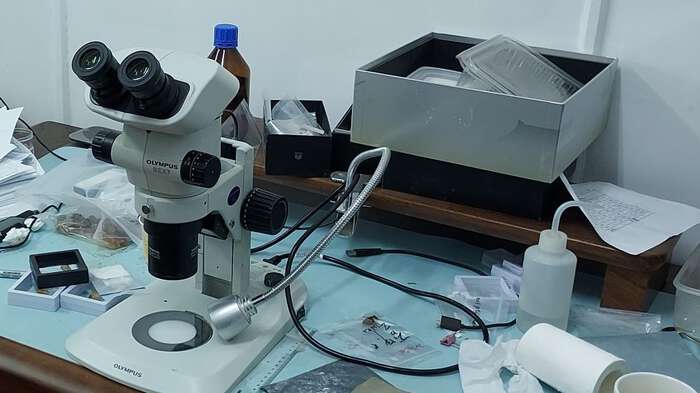
In 2025–2026, Laur did several months of field research on Burmese amber worlds—in Burma (Myanmar), in China, and beyond. Here are some highlights.
Solveig Topstad Borgen has received 10 million kroner in FRIPRO funds from the Research Council for the project IMMIGENDER, which will examine how family formation affects working life for descendants of immigrants in Norway.
How can the UK make deals with EU member countries? Listen to the new episode of Arena Europa.
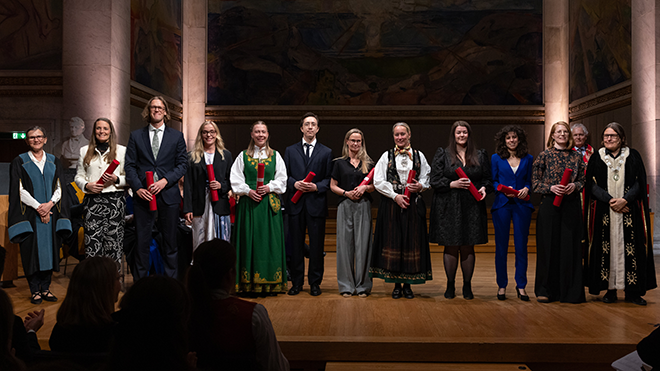
A full twenty candidates from the Faculty of Social Sciences were conferred their doctorates at the solemn ceremony in the Aula on 11 June. Here is the Dean’s presentation of the candidates.
The new “For employees” pages are being developed to become a more user‑friendly, reliable and easy‑to‑navigate tool for staff across the University of Oslo.
Two new projects at the Department of Psychology have been awarded a total of NOK 10 million to work with Ukrainian universities on education in mental health.
The Princess has been admitted to courses at the Faculty of Social Sciences through the University of Oslo’s exchange agreement with the University of Sydney. She will start this autumn.
That was the topic of a panel discussion in Oslo last week.
Manfred Weber, Erna Solberg and John Erik Fossum discussed the challenge from right-wing populism in Europe, in a panel led by Pernille Rieker. Watch the recorded event below.
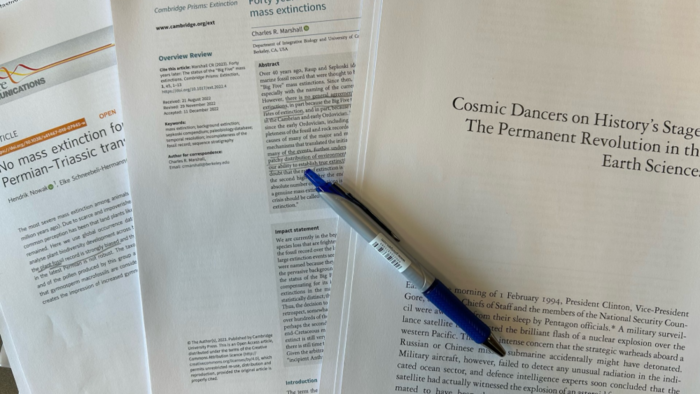
What does it mean to think and write extinction from an antrhropological perspective, and how do old and new paradigms in the earth sciences (might) inform political action today?