
Across the University of Oslo, students have become increasingly involved in educational development. They contribute feedback, are members of different kinds committees, act as mentors and learning assistants to less experienced students and help identify what works - and what does not - in study programmes and courses. But student involvement can take many forms. There is an important difference between asking students for input and creating conditions in which students and staff can genuinely work together to develop teaching and learning.

The latter question is at the heart of the session “Student–staff partnership – and how they unfold in practice” at the Education Conference 2026.
Drawing on experiences and research from the Centre on Experiential Legal Learning (CELL), the session will explore student–staff collaboration as a practical, evolving process. It aims for participants to explore: where might students become partners in developing education and in your teaching, learning and our institutions? And what would it take to make such partnerships meaningful, sustainable and fair?
Student–staff partnership is often described as a way of reducing traditional hierarchies in higher education. Rather than positioning staff as the sole experts and students as recipients of education, partnership recognises that both groups bring valuable – but different – knowledge to educational development.
Why join this workshop?
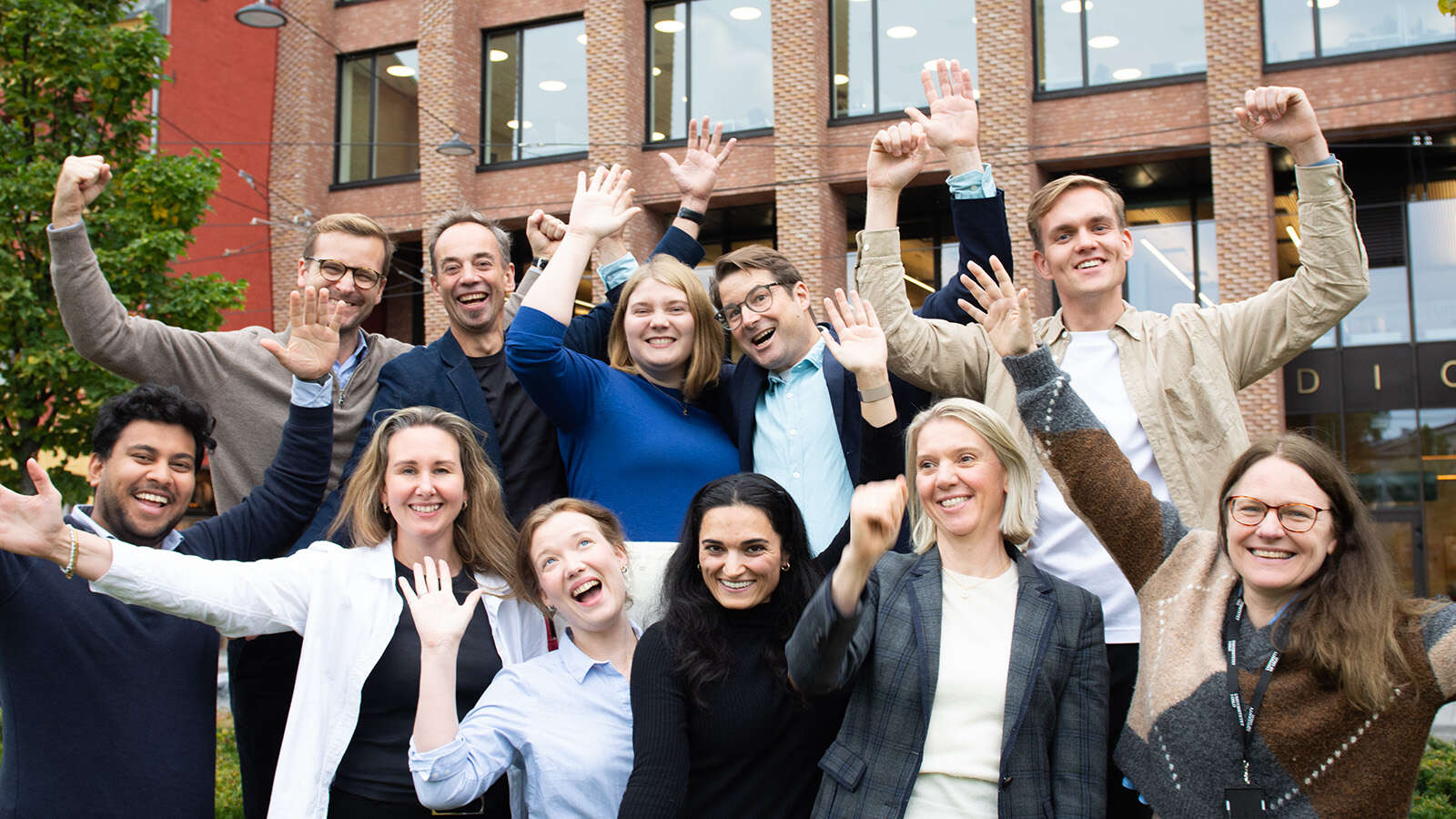
You will be guided by facilitators with deep, hands-on expertise in student-staff partnerships. Nasjida, the Student Centre Leader at CELL and an experienced law student, brings years of practical experience as a student partner in course redesign, peer mentoring, and pedagogical research. She is joined by Hannah, a pedagogical resource at CELL and university lecturer in university pedagogy, whose PhD research specifically investigated the real-world dynamics of student-staff partnerships at CELL. Together, they represent CELL's award-winning partnership model—which recently earned the national Award for Quality in Higher Education (Utdanningskvalitetsprisen for høyere utdanning) for giving students formal roles, responsibilities, and genuine influence over educational development.
Partnership is more than participation
Students have first-hand experience of navigating courses, assessment practices, learning environments and programme structures. Staff contribute disciplinary, pedagogical and institutional expertise. When these perspectives meet, they can generate new ways of understanding educational challenges and new ideas for responding to them.
However, partnership should not be understood as a simple formula or a finished model that can be implemented in the same way everywhere. It unfolds through concrete interactions between people, in particular contexts and around particular tasks.

This is one of the central insights emerging from recent research: partnership is not something that is established once and then remains in place. It must be continually negotiated, configured and practised.
How partnership changes
Partnership does not mean that everyone always does the same thing or has identical expertise. It means taking each other’s contributions seriously and working deliberately and over time to ensure that differences in experience and formal authority do not silence some voices.
The practical implications are significant. Students may need different kinds of support at different stages of a project. Staff may need to step back in some moments, while taking greater responsibility in others – for example, when navigating university structures, ensuring continuity or addressing ethical concerns. The task at hand matters, as do the people involved.
Partnership is therefore dynamic. It develops through dialogue, uncertainty, adjustment and learning.
Build partnerships yourself and Join the conversation - Utdanningskonferansen
Register for Utdanningskonferansen 2026 that takes place the 19th of November and take part in this session, “Student–staff partnership – and how they unfold in practice,” as well as the other sessions throughout the conference.
Utdanningskonferansen 2026 - LINK – Senter for læring og utdanning