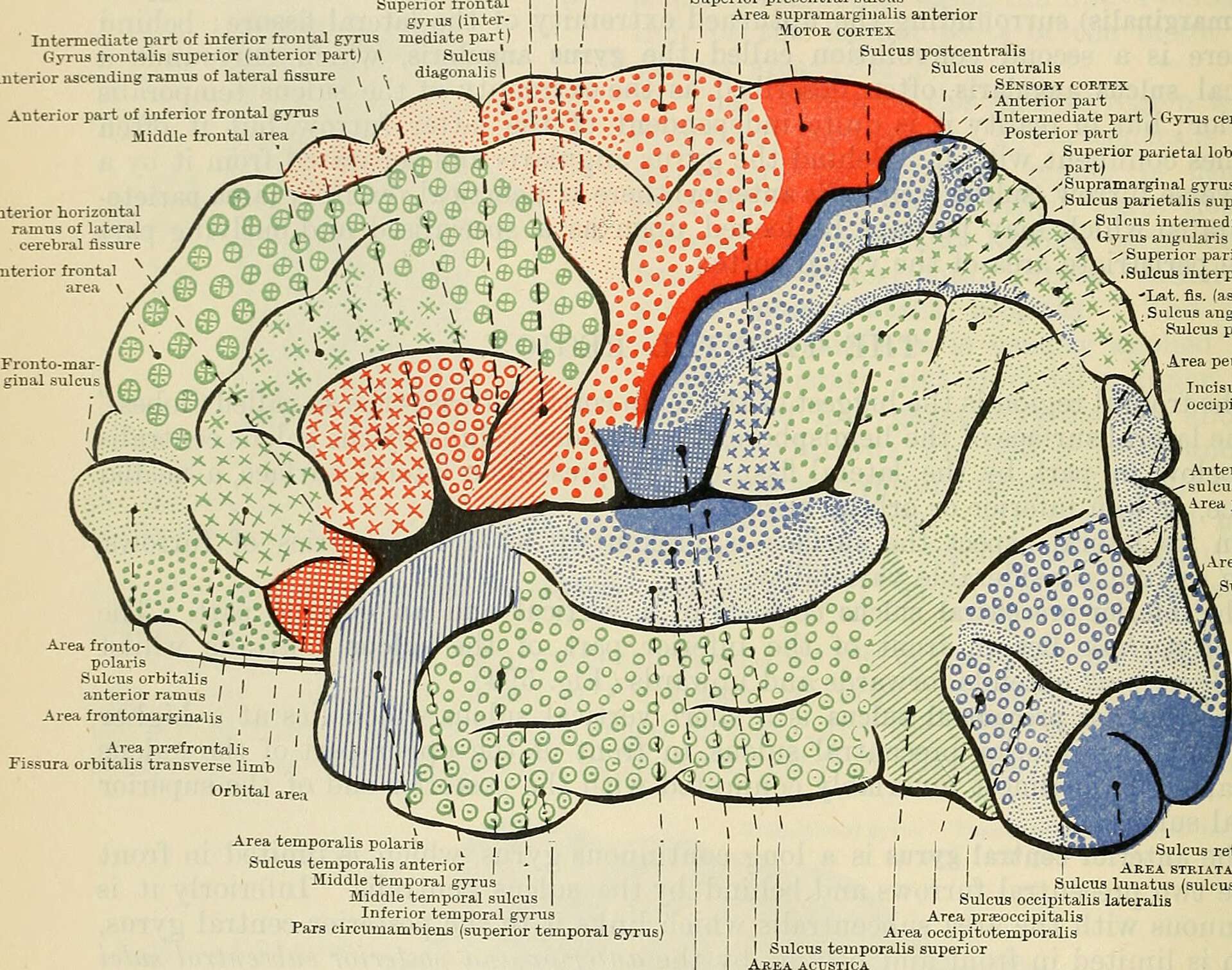


The prefrontal cortex (PFC) sits at the top of the brain's control hierarchy, but how its different subregions — dorsolateral, orbitofrontal, and medial — each contribute to attention, prediction, and decision-making is still poorly understood. This project studies patients with well-characterized, focal lesions to the frontal cortex, comparing them to healthy controls, to reveal which brain regions are necessary for key aspects of cognitive control — not merely associated with it.
Participants complete a series of listening and decision-making tasks while we record EEG, eye movements, and muscle activity, alongside structural MRI to map each patient's lesion precisely. This combination of lesion and electrophysiological methods lets us test, directly, which frontal regions are causally involved in predicting events, mapping abstract task structure, and anticipating reward.
A particular focus is the orbitofrontal cortex (OFC), which recent findings suggest builds and updates an internal "cognitive map" of a task, rather than simply regulating emotion and impulse control as traditionally assumed.
We study the causal contribution of prefrontal and temporal subregions to:
- Predicting the timing, identity, and location of upcoming sounds
- Forming and updating abstract "cognitive maps" of task structure
- Generating and integrating fast-changing reward expectations
- Detecting and responding to breaches of expectation
- Perceiving and reproducing rhythm and timing